White Stuff on Your Peach Pit? Don’t Panic — Here’s What It Really Is (And Why It’s Totally Normal)
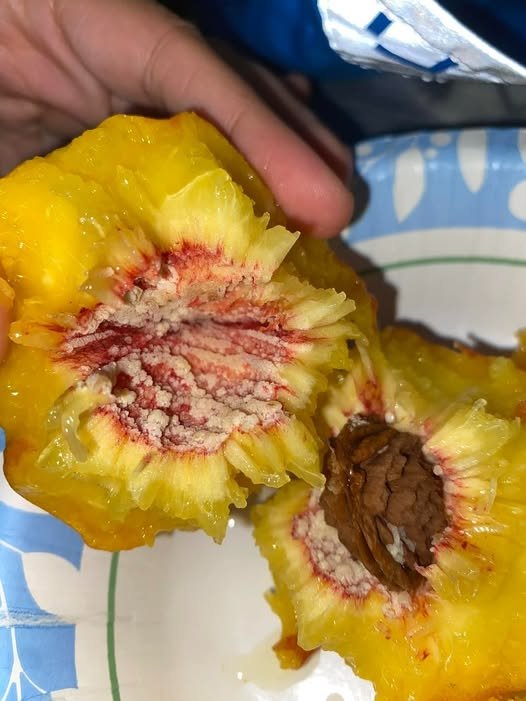
You slice open a beautiful, juicy peach… and suddenly you see something white clinging to the pit. It might look fuzzy, chalky, or slightly cotton-like. Your first thought? Is this mold? Is the peach spoiled?
Take a breath. In most cases, that white stuff on your peach pit is completely normal — and totally harmless.
Let’s break down what it actually is, why it happens, and when (rarely) you should toss the fruit.
🍑 What Is the White Stuff on a Peach Pit?
Most commonly, the white material is one of the following:
1️⃣ Natural Peach Flesh Fibers
Peaches have soft, juicy flesh that surrounds a hard inner stone (the pit). Sometimes, pale fibers cling tightly to the pit when you cut or twist the fruit open. These fibers can look slightly fuzzy or cottony — but they’re simply part of the fruit’s natural structure.
This is especially common in very ripe peaches.
2️⃣ Undeveloped Seed Tissue
Inside the pit is the seed (which looks like an almond). Occasionally, when a peach ripens or develops irregularly, small bits of white tissue from the seed area can appear around the pit.
This is harmless and naturally occurring.
3️⃣ Sap Residue (Gummosis)
Peach trees sometimes produce sap as part of their natural growth or response to minor stress. When fruit develops, traces of dried sap may appear near the pit area.
It can look white or pale and slightly sticky when fresh.
Again — not dangerous.
🌳 Why Does This Happen?
Peaches grow on trees such as Prunus, the same genus that includes cherries, plums, and apricots. These fruits are called stone fruits because of their hard inner pit.
As the fruit ripens:
-
Sugars increase
-
Moisture builds
-
Fibers soften
-
Flesh pulls away from the pit
This natural ripening process can leave pale fibrous strands behind.
Weather conditions — like high heat, heavy rain, or inconsistent watering — can also influence how cleanly a peach separates from its pit.
⚠️ When Should You Be Concerned?
Although white material is usually normal, here’s when you should not eat the peach:
-
The white area is fuzzy like cotton and spreads outward
-
There is a musty or sour smell
-
The flesh around it is brown, gray, or mushy
-
The texture feels slimy
Those are signs of mold or spoilage.
True mold tends to:
-
Spread across the fruit
-
Have green, gray, or blue tones
-
Smell unpleasant
If that’s the case, discard the peach.
🧪 Is It Safe to Eat?
If:
✔ The peach smells sweet
✔ The flesh is firm or softly ripe
✔ The white area is limited to the pit
✔ There’s no fuzzy growth spreading
Then it’s perfectly safe to eat.
You can simply remove the pit and enjoy the fruit as usual.
🍑 Clingstone vs Freestone Peaches
Another reason you might see white fibers has to do with the type of peach.
Freestone Peaches
-
Flesh separates easily from the pit
-
Less fiber clinging
-
Common in grocery stores
Clingstone Peaches
-
Flesh “clings” tightly to the pit
-
More fibrous
-
Often juicier and sweeter
Clingstone varieties are more likely to leave white strands attached.
🌞 Does Ripeness Affect It?
Yes!
Very ripe peaches tend to:
-
Separate unevenly
-
Leave soft white strands behind
-
Show more seed-area tissue
Slightly underripe peaches may also show pale tissue because the fruit hasn’t fully developed around the pit yet.
Both situations are normal.
🍽️ Can You Still Cook With It?
Absolutely.
Even if you’re unsure about the appearance, once you remove the pit, the peach flesh can still be used for:
-
Smoothies
-
Cobblers
-
Jams
-
Salads
-
Grilled peach dishes
As long as the flesh is fresh and fragrant, it’s good to go.
🧊 How to Store Peaches Properly
To reduce odd textures near the pit:
-
Store unripe peaches at room temperature
-
Refrigerate once ripe
-
Avoid excess moisture
-
Use within a few days of ripening
Improper storage can sometimes make pit fibers more noticeable.
🧠 Why This Myth Spreads
Because white fuzz often signals mold in other foods (like bread or berries), people assume any white substance inside fruit means spoilage.
But peaches are different.
The inner pit area naturally has pale tissue — and it’s often mistaken for something dangerous when it’s not.
🍑 The Bottom Line
If you see white stuff on your peach pit:
✔ It’s usually natural fruit fiber
✔ It’s often related to ripeness
✔ It’s completely safe
✔ It does NOT mean the peach is spoiled
Only discard the fruit if there are clear signs of mold, odor, or slimy texture.
So next time you slice open a peach and notice something white near the pit, don’t panic. It’s simply part of how this delicious summer fruit grows.