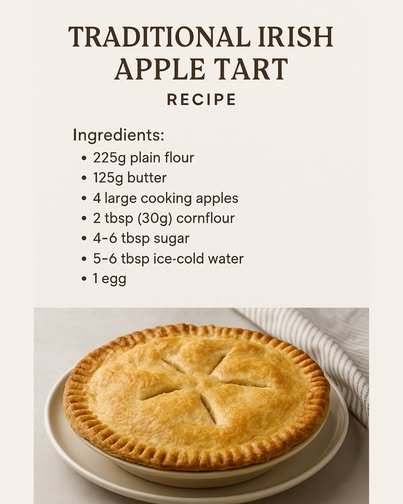
Traditional Irish Apple Tart: A Timeless Taste of Ireland
Traditional Irish apple tart is one of Ireland’s most cherished desserts, celebrated for its simplicity, warmth, and deep connection to home baking. Unlike overly sweet or heavily spiced pastries, this classic tart lets the natural flavor of apples shine. With a buttery shortcrust pastry and a generous filling of tender, lightly sweetened apples, Irish apple tart is comfort food at its finest.
Found in farmhouses, bakeries, and cafés across Ireland, this dessert is often served warm with custard, cream, or vanilla ice cream. It’s a dish that reflects Irish culinary values: honest ingredients, minimal fuss, and maximum flavor.
A Brief History of Irish Apple Tart
Apples have been grown in Ireland for centuries, thriving in the country’s cool, temperate climate. As apples became a staple fruit, home bakers began incorporating them into simple desserts that required few ingredients. The Irish apple tart emerged as a practical and delicious way to use fresh apples, especially during harvest season.
Traditionally, Irish apple tart was baked in large tins to feed families and guests. Recipes were passed down through generations, often memorized rather than written. While variations exist from region to region, the essence of the tart has remained unchanged: shortcrust pastry, apples, sugar, and butter.
What Makes Irish Apple Tart Unique
Irish apple tart differs from other apple desserts in several key ways:
-
Simple ingredients: No heavy spices or thick fillings
-
Chunky apple slices: Apples are sliced rather than finely chopped
-
Shortcrust pastry: Buttery and crumbly, not flaky or puffed
-
Light sweetness: Apples remain the star of the dish
Unlike American apple pie, Irish apple tart is not overly spiced or syrupy. The result is a dessert that feels rustic, balanced, and deeply comforting.
Key Ingredients
Traditional Irish apple tart relies on a short list of ingredients, making quality especially important:
For the Pastry
-
Plain (all-purpose) flour
-
Cold butter
-
Sugar
-
Egg or cold water
-
A pinch of salt
For the Filling
-
Cooking apples (such as Bramley apples)
-
Sugar
-
A small amount of butter
-
Optional: a light sprinkle of cinnamon or nutmeg
Bramley apples are the traditional choice because of their sharp flavor and ability to soften beautifully during baking, creating a tender yet structured filling.
How Traditional Irish Apple Tart Is Made
1. Preparing the Pastry
Butter is rubbed into flour until it resembles breadcrumbs. Sugar and liquid are added to bring the dough together. The pastry is rested to ensure tenderness and ease of rolling.
2. Preparing the Apples
Apples are peeled, cored, and sliced thickly. They are lightly tossed with sugar, allowing their natural flavor to remain front and center.
3. Assembling the Tart
The pastry is rolled out and placed into a tart tin. Apples are piled generously into the shell and dotted with butter. Some versions include a pastry lattice or full pastry lid, while others remain open-faced.
4. Baking
The tart is baked until the pastry is golden and the apples are soft but not mushy. The aroma of baked apples and butter fills the kitchen—a hallmark of Irish home baking.
Serving Traditional Irish Apple Tart
Irish apple tart is best served warm, making it a comforting dessert year-round. Popular accompaniments include:
-
Custard: The most traditional pairing
-
Fresh cream: Lightly whipped or poured
-
Vanilla ice cream: A modern but beloved addition
-
A dusting of powdered sugar: For a simple finish
In Ireland, apple tart is often enjoyed with a cup of tea, making it a perfect afternoon or after-dinner treat.
Cultural Significance
Irish apple tart is more than just a dessert—it’s a symbol of hospitality and tradition. It’s commonly served to guests, baked for family gatherings, and featured in cafés that celebrate traditional Irish cooking.
Many Irish people associate apple tart with childhood memories, grandparents’ kitchens, and Sunday dinners. Its enduring popularity reflects Ireland’s appreciation for foods that are comforting, familiar, and rooted in local ingredients.
Tips for the Perfect Irish Apple Tart
-
Choose tart apples: Sweet apples can make the dessert cloying
-
Don’t over-sugar: Let the apples’ natural flavor shine
-
Keep pastry cold: Cold butter ensures a crumbly texture
-
Pile apples high: They shrink as they bake
-
Rest before serving: Allows flavors to settle and slices to hold
Variations You May See
While purists favor the classic version, subtle variations are common:
-
Lattice-topped apple tart: Adds visual appeal
-
Spiced apple tart: A light hint of cinnamon
-
Rustic free-form tart: Baked without a tin
-
Wholemeal pastry: A heartier, nutty crust
Despite these variations, traditional Irish apple tart always remains simple and apple-forward.
Storage and Shelf Life
Irish apple tart can be stored:
-
At room temperature for up to 24 hours
-
In the refrigerator for 2–3 days
-
Reheated gently in the oven for best texture
It’s often said that apple tart tastes even better the next day as the flavors develop.
Why This Dessert Endures
Traditional Irish apple tart has lasted through generations because it doesn’t rely on trends or complexity. It celebrates seasonal fruit, honest baking, and the joy of sharing food. Its simplicity makes it accessible, while its flavor makes it unforgettable.
In a world of elaborate desserts, Irish apple tart stands as a reminder that sometimes the most meaningful dishes are the simplest ones.
Conclusion
Traditional Irish apple tart is a true classic—warm, comforting, and deeply rooted in Ireland’s culinary heritage. With its buttery pastry and tender apples, it delivers timeless flavor in every bite. Whether served with custard on a chilly evening or enjoyed with tea on a quiet afternoon, this dessert captures the heart of Irish home baking.
For anyone seeking a taste of tradition, nostalgia, and simple pleasure, Irish apple tart is a recipe that never fails.