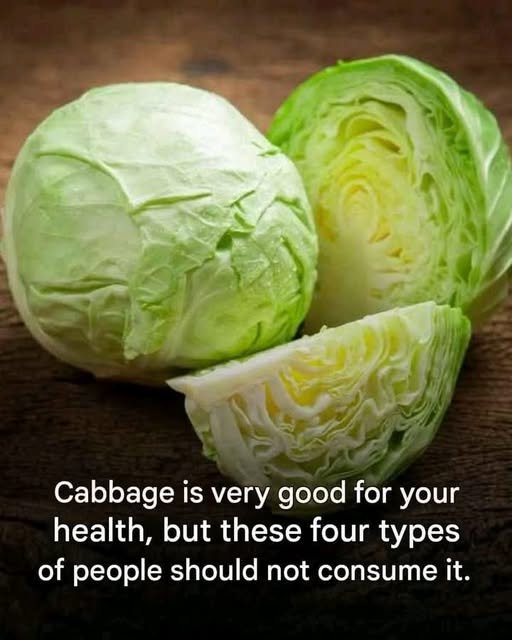
The 4 Types of People Who Shouldn’t Eat Cabbage (or Should Limit It)
Cabbage is often praised as a super-healthy vegetable. It’s low in calories, high in fiber, rich in vitamin C, and packed with antioxidants. From coleslaw to soups to fermented sauerkraut, cabbage appears in many traditional diets around the world.
However, even healthy foods aren’t ideal for everyone. According to doctors and nutrition professionals, there are certain people who may need to avoid cabbage or eat it in moderation, especially in raw form.
Here are the four types of people who should be cautious with cabbage, and why.
1. People With Thyroid Disorders
Cabbage belongs to the cruciferous vegetable family, which also includes broccoli, cauliflower, and kale. These vegetables contain natural compounds called goitrogens.
Goitrogens can:
-
Interfere with iodine absorption
-
Affect thyroid hormone production when eaten in large amounts
-
Be more problematic when consumed raw
For people with hypothyroidism or iodine deficiency, eating large quantities of raw cabbage regularly may place extra stress on the thyroid.
What doctors recommend:
-
Do not eliminate cabbage completely unless advised
-
Eat it cooked rather than raw
-
Keep portions moderate
-
Ensure adequate iodine intake from other foods
Cooking significantly reduces goitrogenic activity.
2. People With Sensitive Digestion or IBS
Cabbage is high in fiber and contains FODMAPs, fermentable carbohydrates that can cause digestive discomfort in sensitive individuals.
For people with:
-
Irritable Bowel Syndrome (IBS)
-
Chronic bloating
-
Gas or abdominal pain
Cabbage can cause:
-
Excessive gas
-
Cramping
-
Bloating
-
Digestive distress
Raw cabbage is especially difficult to digest, as its tough fibers ferment in the gut.
What helps:
-
Choose cooked cabbage instead of raw
-
Start with small portions
-
Avoid combining cabbage with other gas-producing foods
-
Chew thoroughly
If symptoms persist, limiting cabbage may be beneficial.
3. People Prone to Kidney Stones
Cabbage contains oxalates, natural compounds found in many vegetables. While cabbage is not extremely high in oxalates, frequent large servings may contribute to stone formation in people who are already prone to calcium oxalate kidney stones.
For these individuals, cabbage may:
-
Increase oxalate load
-
Contribute to stone risk when combined with low hydration
Medical guidance often includes:
-
Moderation rather than avoidance
-
Drinking plenty of water
-
Balancing oxalate foods with calcium-rich foods
People with a history of kidney stones should always follow personalized dietary advice.
4. People on Blood-Thinning Medication
Cabbage is high in vitamin K, a nutrient essential for blood clotting. While vitamin K is beneficial for most people, it can interfere with blood-thinning medications such as warfarin.
Sudden increases or decreases in vitamin K intake can:
-
Reduce medication effectiveness
-
Increase clotting risk
-
Make blood levels harder to manage
Doctors usually advise:
-
Keeping vitamin K intake consistent
-
Avoiding large fluctuations in cabbage consumption
-
Consulting a healthcare provider before major diet changes
This doesn’t mean cabbage is forbidden—but consistency is key.
Raw vs Cooked: Why It Matters
Many of cabbage’s potential issues are stronger when it’s eaten raw.
Raw cabbage:
-
Is harder to digest
-
Contains more active goitrogens
-
Produces more gas
Cooked cabbage:
-
Is gentler on digestion
-
Has reduced goitrogenic compounds
-
Is easier to tolerate for most people
Steaming, sautéing, boiling, or fermenting cabbage can make it more suitable for sensitive individuals.
Signs Cabbage May Not Agree With You
Your body often gives clear signals. Common signs cabbage may not be ideal for you include:
-
Persistent bloating or gas
-
Abdominal pain
-
Worsening thyroid symptoms
-
Digestive discomfort after meals
Listening to your body is just as important as following general nutrition advice.
Should You Stop Eating Cabbage Completely?
For most people, no. Cabbage is a nutritious vegetable with many benefits. The key is personalization, preparation method, and portion size.
Cabbage can still be enjoyed safely by:
-
Cooking it thoroughly
-
Eating it occasionally rather than daily
-
Pairing it with easy-to-digest foods
-
Adjusting intake based on your health needs
Final Thoughts
Cabbage is healthy—but not universally perfect. Doctors emphasize that nutrition is not one-size-fits-all. If you fall into one of these four categories, cabbage may need to be limited or prepared differently to avoid unwanted effects.
The goal isn’t fear—it’s informed, mindful eating that supports your body rather than stresses it.