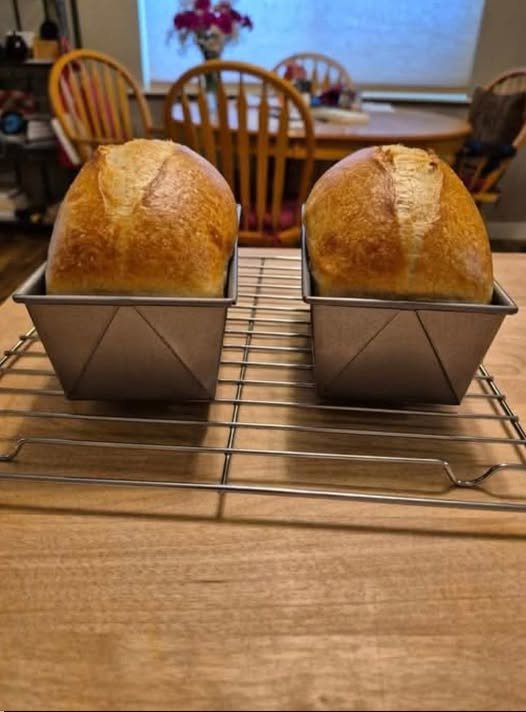
Sourdough Sandwich Loaf – Soft, Sliceable, and Perfect for Everyday Sandwiches
A sourdough sandwich loaf combines the natural flavor of sourdough with the soft, tender crumb that makes it ideal for sandwiches, toast, and daily use. Unlike rustic sourdough boules with thick crusts and large holes, this loaf is designed to be evenly textured, easy to slice, and family-friendly, while still delivering the gentle tang and depth that only sourdough can provide.
This recipe is perfect if you love sourdough but want a loaf that works beautifully for peanut butter sandwiches, grilled cheese, breakfast toast, or packed lunches.
Why Choose a Sourdough Sandwich Loaf?
Traditional sourdough bread is delicious but not always practical for sandwiches. A sandwich loaf solves that problem by offering:
-
A soft, uniform crumb
-
Thin, tender crust
-
Mild sourdough flavor
-
Square slices that fit perfectly in a toaster
This loaf is fermented naturally, easier to digest than commercial bread, and keeps well for several days.
Ingredients
For one loaf
-
120 g active sourdough starter (fed and bubbly)
-
300 g warm milk or water
-
30 g butter or olive oil, softened
-
20 g honey or sugar
-
9 g salt
-
500 g bread flour
Preparing the Dough
1. Mix the Ingredients
In a large mixing bowl, combine the sourdough starter, warm milk (or water), honey, and butter. Stir until well blended.
Add the flour and salt. Mix until a rough dough forms and no dry flour remains. Cover and let rest for 20–30 minutes. This resting period allows the flour to hydrate and improves dough structure.
2. Knead the Dough
Knead the dough by hand for 8–10 minutes or using a stand mixer for 5–6 minutes until smooth, elastic, and slightly tacky but not sticky.
The dough should stretch without tearing and feel soft to the touch.
Bulk Fermentation
Place the dough in a lightly greased bowl. Cover and let it ferment at room temperature for 4–6 hours, depending on room temperature and starter strength.
During fermentation, the dough should increase in size by about 50–70%. It won’t double like yeast bread, but it should feel airy and relaxed.
Optional: Perform one or two gentle stretch-and-folds during the first 2 hours to strengthen the dough.
Shaping the Sandwich Loaf
Once fermentation is complete, gently turn the dough onto a lightly floured surface.
-
Press the dough into a rectangle
-
Fold the top third down and the bottom third up
-
Roll tightly into a log
-
Pinch the seam closed
Place the dough seam-side down into a greased loaf pan (approximately 23 x 13 cm).
Final Proof
Cover the loaf pan and let the dough proof at room temperature for 2–4 hours, or until the dough rises just above the rim of the pan.
The dough should look puffy and spring back slowly when lightly pressed.
Baking the Loaf
Preheat the oven to 190°C (375°F).
Place the loaf pan in the center of the oven and bake for 40–45 minutes, until golden brown and the internal temperature reaches 96–98°C (205–208°F).
If the top browns too quickly, loosely cover with foil during the last 10 minutes.
Cooling
Remove the loaf from the pan immediately after baking and let it cool on a wire rack for at least 1 hour before slicing.
Cutting too early can result in a gummy texture, so patience is key.
Tips for the Perfect Sourdough Sandwich Loaf
-
Use an active starter for good rise
-
Milk creates a softer crumb; water gives a lighter texture
-
Don’t overproof—this can cause collapse
-
Always cool fully before slicing
-
A loaf pan ensures even baking
Variations to Try
Whole Wheat Sourdough Sandwich Loaf
Replace up to 30% of the bread flour with whole wheat flour.
Seeded Sandwich Bread
Add sunflower seeds, flaxseeds, or sesame seeds to the dough.
Honey Oat Version
Add rolled oats and extra honey for a lightly sweet loaf.
Dairy-Free Option
Use water and olive oil instead of milk and butter.
Storage and Shelf Life
-
Store at room temperature for 3–4 days
-
Wrap in a clean cloth or bread bag
-
Freeze sliced bread for up to 3 months
-
Toast directly from frozen
Sourdough stays fresh longer than commercial bread due to its natural fermentation.
Why This Recipe Works
This sourdough sandwich loaf balances structure, softness, and flavor. The enriched dough creates a tender crumb, while natural fermentation provides complexity without overpowering sourness.
It’s reliable, practical, and perfect for everyday use—exactly what a sandwich loaf should be.
Final Thoughts
A homemade sourdough sandwich loaf brings together the best of both worlds: artisan flavor and everyday convenience. Soft enough for kids, flavorful enough for sourdough lovers, and versatile enough for any meal, this loaf deserves a permanent place in your baking routine.
Once you try it, it’s hard to go back to store-bought bread.