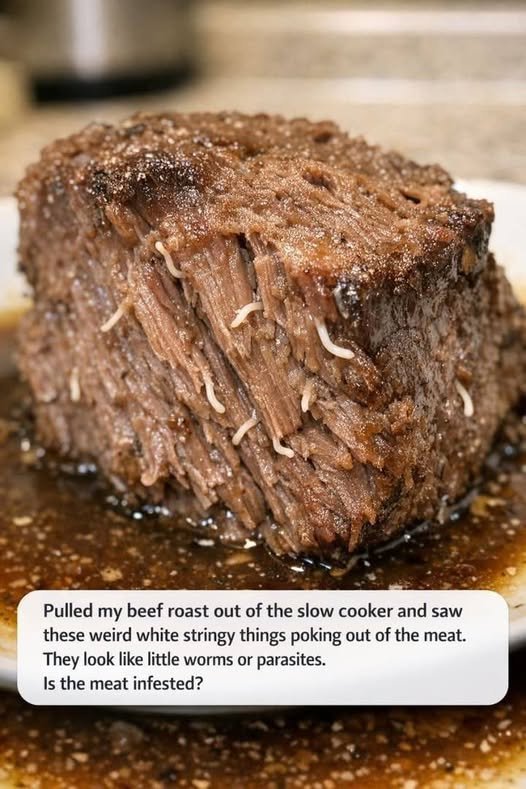
Pulled My Beef Roast Out of the Slow Cooker and Saw These Weird White Stringy Things—Are They Worms or Parasites?
Cooking a beef roast in a slow cooker is usually a comforting and satisfying experience. After hours of slow cooking, the meat becomes tender, flavorful, and easy to pull apart. However, some people are surprised or even alarmed when they remove their roast from the slow cooker and notice white, stringy strands poking out of the meat. At first glance, these strands can resemble tiny worms or parasites, which can understandably cause concern.
If this has happened to you, don’t panic. In most cases, these strange-looking white strings are completely normal parts of the meat’s structure, not parasites or anything harmful. Understanding what they are and why they appear during slow cooking can help ease your worries and ensure your meal is safe to enjoy.
What Are the White Stringy Pieces in Cooked Beef?
Those white or pale strands that sometimes appear in slow-cooked beef are usually connective tissue fibers, tendons, or collagen that have changed during the cooking process.
Beef is made up of several components, including:
-
Muscle fibers
-
Fat
-
Collagen
-
Connective tissues
-
Tendons and membranes
When meat is cooked slowly for several hours, especially in moist heat like a slow cooker or braising pot, these tissues break down and soften. As the roast becomes tender, some of these fibers separate from the meat and become visible as thin, white, string-like strands.
Although they may look unusual, they are simply natural parts of the beef.
Why Slow Cooking Makes These Strands More Visible
Slow cooking works by gently breaking down tough tissues in meat. Cuts of beef that are ideal for slow cooking—such as chuck roast, shoulder roast, or brisket—contain more connective tissue than lean cuts like steak.
During long cooking times:
-
Collagen softens and melts into gelatin.
-
Muscle fibers loosen and separate.
-
Tendons and connective tissues soften but may remain visible.
Because of this process, the fibers sometimes appear as thin, stretchy strands that stick out when the meat is pulled apart.
These strands can resemble tiny worms at first glance, but they are simply softened connective tissue.
The Role of Collagen in Slow-Cooked Meat
Collagen is a structural protein found in animal muscles and connective tissues. It plays a key role in keeping muscles strong and flexible while the animal is alive.
When beef is cooked quickly, collagen can remain tough and chewy. However, when cooked slowly at low temperatures, collagen gradually breaks down into gelatin, which gives slow-cooked meat its signature tenderness and rich texture.
Some collagen fibers don’t completely dissolve and instead appear as thin, pale strands within the meat. These are harmless and safe to eat.
Could They Actually Be Parasites?
It’s extremely unlikely that the white strands you see in cooked beef are parasites. In many countries, beef sold in stores goes through strict inspection processes to ensure it is safe for consumption.
Additionally, proper cooking temperatures destroy parasites that might exist in raw meat.
Parasites would also look different from connective tissue. They typically appear as distinct organisms rather than fibers attached to the meat structure.
If the strands seem firmly attached to the meat and stretch like fibers when pulled, they are almost certainly connective tissue rather than worms.
Signs the Meat Is Perfectly Safe
In most situations, your beef roast is safe to eat if it meets the following conditions:
-
The meat smells normal and savory
-
It was cooked thoroughly
-
The strands appear attached to the meat fibers
-
The texture looks like soft connective tissue rather than separate organisms
Slow-cooked beef often falls apart into strands when shredded, which is a sign that the cooking process worked properly.
When You Should Be Cautious
While the white strands are usually harmless connective tissue, there are a few situations where you may want to discard the meat.
Be cautious if you notice:
-
A strong sour or rotten odor
-
Unusual discoloration or mold
-
Slimy textures unrelated to cooking juices
-
Visible organisms that appear separate from the meat fibers
These signs are rare but may indicate spoilage rather than normal connective tissue.
How to Reduce Visible Connective Tissue
If the appearance of these strands bothers you, there are a few ways to minimize them when preparing beef roast.
Trim excess connective tissue before cooking.
Some roasts have visible membranes or tendons that can be trimmed with a knife.
Choose different cuts of beef.
Lean cuts such as sirloin or round have less connective tissue, though they may not be as tender when slow cooked.
Shred the meat thoroughly.
Mixing the meat after cooking distributes the fibers and makes them less noticeable.
Even though these strands are harmless, removing or shredding them can improve the appearance of the dish.
Why Slow-Cooked Beef Is Still a Great Choice
Despite the occasional surprise of seeing connective tissue strands, slow-cooked beef remains one of the most flavorful and comforting ways to prepare meat.
Slow cooking offers several advantages:
-
Tender, fall-apart texture
-
Rich, deep flavor development
-
Easy meal preparation
-
Perfect for hearty family dinners
The same connective tissues that might look unusual during cooking are actually what create the juicy, melt-in-your-mouth texture people love in pot roast, shredded beef, and braised dishes.
Final Thoughts
Discovering white stringy strands in your slow-cooked beef roast can be surprising at first, especially if they resemble worms or parasites. Fortunately, in nearly every case, these strands are simply connective tissue fibers or collagen that have softened during the slow cooking process.
They are a natural part of tougher cuts of beef and are completely safe to eat. In fact, the breakdown of collagen is what makes slow-cooked meat so tender and flavorful.
So the next time you notice these strange-looking strands in your roast, you can feel confident knowing that they’re just part of the science of slow cooking—and your meal is still perfectly delicious and safe to enjoy.