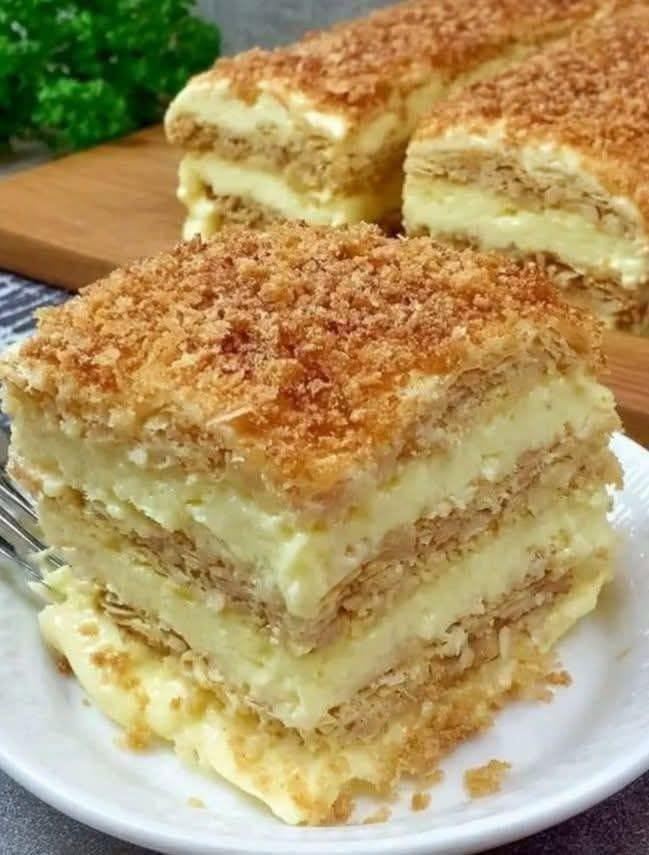
Napoleon Cake (Mille-Feuille) – The Ultimate Layered Custard Dessert
Napoleon cake is a timeless, elegant dessert made with delicate layers of flaky pastry and luscious vanilla custard cream. Known in France as Mille-feuille, this classic treat has become beloved across Europe and beyond. In Russia and Eastern Europe, it’s famously called “Napoleon” and is often served at celebrations, holidays, and family gatherings.
With its crisp layers that soften into a creamy, melt-in-your-mouth texture, Napoleon cake is both refined and comforting. While it may look impressive and bakery-worthy, you can absolutely make it at home with patience and a few simple techniques.
Why You’ll Love This Napoleon Cake
-
Elegant and impressive – Perfect for special occasions
-
Rich vanilla custard – Smooth, creamy, and not overly sweet
-
Flaky pastry layers – Light and crisp
-
Make-ahead friendly – Tastes even better the next day
-
Classic European dessert – A true showstopper
Ingredients
For the Pastry Layers
-
2 sheets puff pastry (store-bought or homemade)
-
Powdered sugar (for dusting)
For the Vanilla Custard Cream
-
4 cups whole milk
-
4 egg yolks
-
¾ cup granulated sugar
-
⅓ cup cornstarch
-
2 tablespoons butter
-
1 tablespoon vanilla extract
-
Optional: ½ cup heavy cream (for a lighter, fluffier filling)
Step-by-Step Instructions
1. Prepare the Pastry Layers
-
Preheat oven to 400°F (200°C).
-
Roll out puff pastry sheets slightly to create even thickness.
-
Place on a parchment-lined baking sheet.
-
Prick the pastry all over with a fork to prevent excessive puffing.
-
Bake for 15–20 minutes until golden brown and crisp.
-
Allow to cool completely.
Once cooled, trim edges if needed and cut into even rectangles or squares. You can make 6–8 layers depending on thickness. Save pastry scraps for topping later.
2. Make the Vanilla Custard Cream
-
In a saucepan, heat milk over medium heat until steaming (do not boil).
-
In a separate bowl, whisk egg yolks, sugar, and cornstarch until smooth and pale.
-
Slowly pour warm milk into the egg mixture while whisking continuously.
-
Return mixture to the saucepan and cook over medium heat, stirring constantly.
-
Cook until thick and creamy (about 5–7 minutes).
-
Remove from heat and stir in butter and vanilla extract.
Let the custard cool completely. Cover with plastic wrap touching the surface to prevent skin from forming.
For a lighter texture, whip heavy cream separately and fold into cooled custard before assembling.
3. Assemble the Cake
-
Place one pastry layer on a serving plate.
-
Spread an even layer of custard cream on top.
-
Repeat layering pastry and cream until all layers are used.
-
Finish with a pastry layer on top.
Crush reserved pastry scraps into fine crumbs and sprinkle over the top and sides of the cake. Dust lightly with powdered sugar.
4. Chill for Best Texture
Refrigerate the assembled cake for at least 6–8 hours, preferably overnight.
This resting time is essential — the crisp pastry softens slightly from the custard, creating that signature delicate, sliceable texture.
Tips for Perfect Napoleon Cake
-
Keep pastry thin: Thin layers create the best texture balance.
-
Cool everything completely: Warm custard will make layers soggy.
-
Chill overnight: The flavors deepen and texture improves.
-
Slice with a sharp knife: Clean cuts give a beautiful presentation.
-
Don’t skip the crumbs: They create the classic Napoleon appearance.
Variations
Chocolate Napoleon
Add melted chocolate to the custard or drizzle chocolate glaze on top.
Berry Napoleon
Add thin layers of fresh raspberries or strawberries between custard layers.
Caramel Version
Fold dulce de leche into part of the custard for a rich twist.
Russian-Style Napoleon
Some Eastern European versions use many ultra-thin homemade dough layers instead of puff pastry for a more delicate texture.
Make-Ahead & Storage
-
Store in the refrigerator for up to 3–4 days.
-
Best enjoyed within 48 hours for ideal texture.
-
Not recommended for freezing once assembled, as texture may change.
Why Napoleon Cake Is So Special
Napoleon cake is more than just a dessert — it’s a celebration cake, often made for birthdays, holidays, and festive gatherings. The contrast between crisp pastry and silky custard makes each bite layered with texture and flavor.
Though rooted in French pastry tradition, it has become a beloved staple across many cultures. Its elegant appearance and creamy richness make it worthy of any special occasion table.