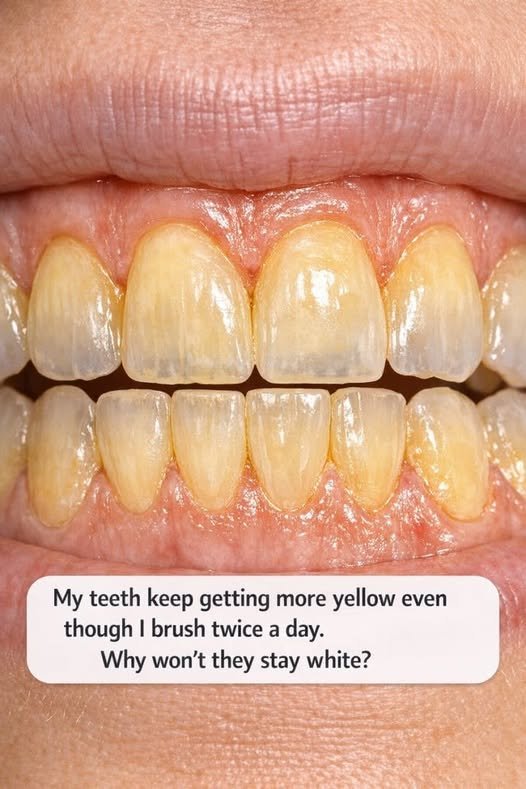
My Teeth Keep Getting More Yellow Even Though I Brush Twice a Day – Why Won’t They Stay White? 🦷
Many people assume that brushing twice a day should keep their teeth bright white. While good brushing habits are essential for oral health, they don’t always guarantee perfectly white teeth. If you’ve noticed your teeth gradually becoming more yellow despite brushing regularly, you’re not alone. Tooth discoloration is extremely common and can happen for several reasons that go beyond daily brushing.
Understanding why teeth lose their whiteness can help you take better steps to maintain a brighter smile and improve your overall dental health.
The Natural Color of Teeth
First, it’s important to understand that teeth are not naturally pure white. The outer layer of the tooth, called enamel, is slightly translucent. Beneath it lies dentin, which has a naturally yellow tone.
Over time, enamel can become thinner or stained, allowing more of the yellow dentin underneath to show through. This makes teeth appear darker or more yellow even if they are clean and healthy.
So even if you brush twice a day, the color of your teeth may still change because of natural biological processes.
1. Staining from Food and Drinks
One of the most common reasons teeth become yellow is staining from everyday foods and beverages.
Certain drinks and foods contain pigments called chromogens that stick to tooth enamel and gradually discolor it.
Common staining culprits include:
-
Coffee
-
Tea
-
Red wine
-
Dark sodas
-
Tomato sauce
-
Berries
-
Curry and other strongly colored spices
If you consume these frequently, they can stain teeth even if you brush regularly.
Acidic drinks like soda or citrus juices can also weaken enamel, making it easier for stains to stick.
2. Plaque and Tartar Buildup
Even with regular brushing, plaque can still accumulate on teeth, especially in hard-to-reach areas. Plaque is a sticky film of bacteria that forms on the teeth throughout the day.
If plaque isn’t removed properly, it can harden into tartar, which has a yellow or brown appearance. Unlike plaque, tartar cannot be removed with a toothbrush and requires professional dental cleaning.
This buildup can make teeth appear darker or dull even if you brush daily.
3. Brushing Technique Matters
Brushing twice a day is important, but how you brush matters just as much as how often you brush.
Many people brush too quickly or miss certain areas of the mouth. If plaque and food particles remain on the teeth, discoloration can occur.
Dentists recommend brushing for at least two minutes and covering all surfaces of the teeth:
-
Front surfaces
-
Back surfaces
-
Chewing surfaces
-
Along the gum line
Using the right toothbrush and replacing it every three to four months also helps improve cleaning effectiveness.
4. Smoking and Tobacco Use
Tobacco is one of the biggest causes of yellow teeth. Cigarettes, cigars, and chewing tobacco contain substances such as tar and nicotine that strongly stain enamel.
These stains can penetrate deeply into the tooth surface, making them difficult to remove with brushing alone.
People who smoke often develop yellow, brown, or even gray discoloration on their teeth over time.
5. Aging and Enamel Wear
As we age, the outer enamel layer gradually becomes thinner due to years of chewing, brushing, and exposure to acidic foods.
When enamel wears down, the yellow dentin underneath becomes more visible, causing teeth to look darker.
This natural aging process happens even in people with excellent dental hygiene.
6. Certain Medications
Some medications can cause tooth discoloration as a side effect.
For example, certain antibiotics such as tetracycline can lead to tooth staining, particularly if taken during childhood while teeth are still developing.
Other medications that may affect tooth color include:
-
Some antihistamines
-
High blood pressure medications
-
Antipsychotic drugs
-
Chemotherapy treatments
These types of stains often occur inside the tooth structure and may require professional whitening treatments.
7. Genetics and Natural Tooth Shade
Just like hair and eye color, tooth color is partly determined by genetics.
Some people naturally have thicker enamel or lighter dentin, while others may have teeth that appear slightly darker from the start.
Even with perfect brushing habits, genetics can influence how white your teeth appear.
8. Overbrushing or Using the Wrong Toothpaste
Ironically, brushing too aggressively can actually contribute to tooth discoloration.
Hard brushing or using very abrasive toothpaste can wear down enamel, exposing the darker dentin layer underneath.
This makes teeth look more yellow over time. Dentists usually recommend using a soft-bristled toothbrush and gentle circular motions.
How to Keep Teeth Whiter
Although brushing alone may not guarantee white teeth, several habits can help maintain a brighter smile.
1. Brush properly
Brush twice daily for at least two minutes with fluoride toothpaste.
2. Floss daily
Flossing removes plaque between teeth where brushes can’t reach.
3. Rinse after staining drinks
Drinking water after coffee or wine helps reduce staining.
4. Visit the dentist regularly
Professional cleanings remove tartar and surface stains.
5. Consider whitening treatments
Dentists can provide safe whitening procedures that lighten teeth more effectively than brushing alone.
When to See a Dentist
If your teeth are becoming yellow quickly or unevenly, it may be worth consulting a dentist.
A dental professional can check for issues such as:
-
enamel erosion
-
plaque buildup
-
cavities
-
gum disease
They can also recommend whitening options suited to your teeth.
Final Thoughts
Brushing twice a day is an excellent habit, but it doesn’t always prevent teeth from turning yellow. Factors such as diet, aging, genetics, plaque buildup, and enamel wear all play a role in tooth color.
Maintaining white teeth usually requires a combination of good brushing habits, professional cleanings, and mindful lifestyle choices.