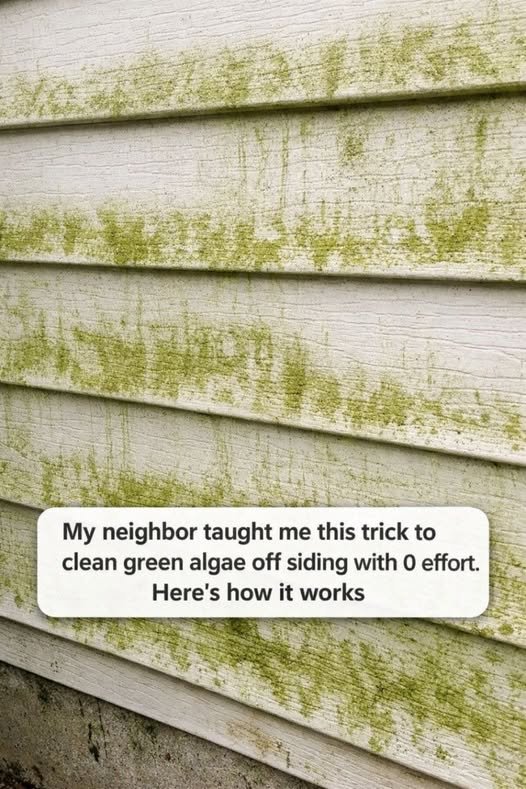
My Neighbor Taught Me This Trick to Clean Green Algae Off Siding With Almost No Effort — Here’s How It Works
If you’ve ever looked at the outside of your house and noticed green streaks or patches on the siding, you’re not alone. Green algae buildup is a common problem for many homeowners, especially in areas that experience humidity, rain, or shade. Over time, siding can develop unsightly stains that make even a well-maintained home look neglected.
For years, many people try scrubbing, pressure washing, or using expensive cleaning products to remove algae. These methods can be time-consuming, physically demanding, and sometimes even damaging to siding materials. But what if there were a much easier solution?
A few summers ago, while I was struggling to scrub green algae off the side of my house, my neighbor noticed and shared a simple trick he had been using for years. The best part? It requires very little effort, inexpensive ingredients, and delivers surprisingly effective results.
Here’s exactly how this easy algae-cleaning method works.
Why Green Algae Forms on Siding
Before learning how to remove algae, it helps to understand why it appears in the first place.
Green algae thrive in environments that are:
-
Damp or humid
-
Shaded from direct sunlight
-
Surrounded by trees or vegetation
-
Exposed to frequent rain or moisture
North-facing walls and areas behind bushes or trees often develop algae first because they remain moist longer after rainfall.
Vinyl siding, wood siding, and even painted surfaces can all develop this green discoloration if moisture lingers long enough.
While algae usually doesn’t damage siding immediately, it can stain surfaces and make your home look older or poorly maintained if left untreated.
The Simple Cleaning Trick
The trick my neighbor shared uses a basic homemade cleaning solution that breaks down algae quickly so it rinses away easily.
What You’ll Need
-
1 gallon warm water
-
1 cup white vinegar
-
1 tablespoon dish soap
-
A garden sprayer or spray bottle
-
A garden hose
These ingredients are inexpensive and easy to find, yet surprisingly effective at dissolving algae buildup.
How the Solution Works
Each ingredient plays an important role in removing algae.
White vinegar contains natural acids that help break down algae and mildew.
Dish soap helps lift dirt, grime, and organic buildup from the siding surface.
Warm water helps the ingredients blend together and spread evenly.
When sprayed onto algae-covered siding, this mixture loosens the buildup so it can be rinsed away with minimal scrubbing.
Step-by-Step Cleaning Instructions
Step 1: Mix the Solution
In a garden sprayer or large spray bottle, combine:
-
1 gallon warm water
-
1 cup white vinegar
-
1 tablespoon dish soap
Shake gently to mix everything together.
Step 2: Spray the Affected Area
Spray the cleaning solution generously over the areas of siding covered in green algae.
Make sure the surface is fully coated. The goal is to allow the mixture to soak into the algae buildup.
Step 3: Let It Sit
Allow the solution to sit for 10–15 minutes.
During this time, the vinegar and soap will begin breaking down the algae, loosening it from the siding.
This soaking step is what makes the process so easy—most of the work happens automatically.
Step 4: Rinse With a Hose
After the waiting period, simply rinse the siding using a regular garden hose.
In many cases, the algae will wash away immediately with the water pressure alone.
If any small spots remain, a soft brush or sponge can gently wipe them away.
Why This Method Is So Effective
This cleaning trick works well because it targets algae directly while remaining gentle on siding.
Unlike harsh chemical cleaners or high-pressure washers, this method:
-
Doesn’t damage vinyl or painted surfaces
-
Requires little physical scrubbing
-
Uses simple household ingredients
-
Is budget-friendly
Many homeowners are surprised by how quickly the green stains disappear after just one treatment.
Tips for Best Results
To get the most out of this cleaning trick, keep these helpful tips in mind.
Choose the Right Weather
Clean siding on a mild day when temperatures are moderate. Avoid extremely hot days, which can cause the solution to dry too quickly.
Start at the Bottom
Spraying from the bottom upward helps prevent streaking and ensures even coverage.
Test a Small Area First
Although this solution is generally safe for most siding materials, testing a small hidden area first is always a good idea.
Use a Soft Brush if Needed
For stubborn spots, gently scrubbing with a soft-bristle brush can help remove leftover algae.
Preventing Algae From Coming Back
After cleaning your siding, you can reduce the chances of algae returning by making a few small changes around your home.
Trim nearby trees or bushes to allow more sunlight and airflow.
Clean gutters regularly so water doesn’t spill onto siding.
Move sprinklers away from walls to prevent constant moisture.
Wash siding once or twice a year to prevent buildup from forming.
These small steps can keep your home exterior looking fresh for much longer.
When to Avoid Pressure Washing
Many people turn to pressure washers when they see algae on siding. While pressure washing can remove stains, it can also cause damage if used incorrectly.
High pressure can:
-
Crack vinyl siding
-
Force water behind panels
-
Remove paint or protective coatings
That’s why gentler cleaning methods like this vinegar solution are often recommended first.
Final Thoughts
Sometimes the best home maintenance tips come from everyday conversations. Thanks to my neighbor’s simple suggestion, cleaning algae off siding went from a frustrating chore to an easy weekend task.
With just a few household ingredients and a garden hose, you can remove green algae and restore your home’s exterior without hours of scrubbing or expensive products.