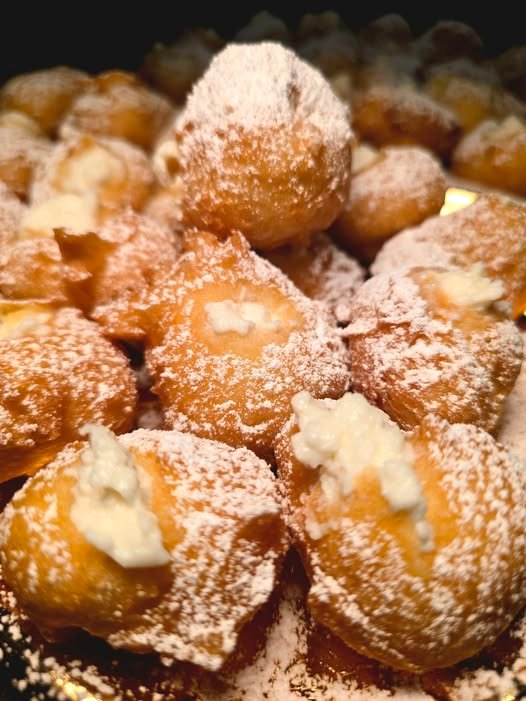
Italian Castagnole with Ricotta Cream – Light, Golden & Irresistibly Creamy
If you’ve ever visited Italy during Carnival season, you’ve likely seen trays of golden, bite-sized fried dough balls dusted in sugar. These delightful treats are called Castagnole, a traditional Italian pastry named after chestnuts (“castagne”) because of their small, round shape.
In this version, we take classic castagnole to the next level by serving them with a luscious ricotta cream filling. Crispy on the outside, soft and airy inside, and filled with silky sweet ricotta, these pastries are festive, elegant, and completely irresistible.
Perfect for holidays, family gatherings, or weekend indulgence, Italian Castagnole with Ricotta Cream are easier to make than you might think.
What Are Castagnole?
Castagnole are small Italian fried dough balls traditionally enjoyed during Carnevale (Carnival). They’re similar to doughnut holes but lighter and more delicate. Some are plain and rolled in sugar, while others are filled with pastry cream, chocolate, or ricotta.
The ricotta cream adds a rich yet airy texture that perfectly balances the crisp fried shell.
Why You’ll Love This Recipe
-
Light and fluffy texture
-
Golden and crisp exterior
-
Creamy ricotta filling
-
Perfect for celebrations
-
Easy to prepare
-
Beautiful presentation
These little pastries look impressive but require simple ingredients and straightforward steps.
Ingredients
For the Castagnole Dough:
-
2 cups (250 g) all-purpose flour
-
2 tablespoons sugar
-
2 teaspoons baking powder
-
¼ teaspoon salt
-
2 large eggs
-
¼ cup milk
-
2 tablespoons melted butter
-
1 teaspoon vanilla extract
-
Zest of 1 lemon (optional but traditional)
-
Oil for frying
For the Ricotta Cream:
-
1 cup (250 g) whole milk ricotta
-
½ cup powdered sugar
-
1 teaspoon vanilla extract
-
Zest of ½ lemon (optional)
-
2 tablespoons mini chocolate chips (optional)
For finishing:
-
Granulated sugar or powdered sugar
Step-by-Step Instructions
1. Prepare the Ricotta Cream
In a bowl, combine:
-
Ricotta
-
Powdered sugar
-
Vanilla
-
Lemon zest (if using)
Mix until smooth and creamy. For an extra silky texture, you can blend it briefly in a food processor.
Refrigerate for at least 30 minutes to firm up while you prepare the dough.
2. Make the Castagnole Dough
In a large bowl, whisk together:
-
Flour
-
Sugar
-
Baking powder
-
Salt
In another bowl, whisk:
-
Eggs
-
Milk
-
Melted butter
-
Vanilla
-
Lemon zest
Pour the wet ingredients into the dry ingredients and mix until a soft dough forms. It should be slightly sticky but manageable.
Do not overmix — this keeps the castagnole tender.
3. Heat the Oil
In a deep saucepan, heat oil to 350°F (175°C).
Use enough oil for the dough balls to float freely.
Test with a small piece of dough — it should rise quickly and bubble gently.
4. Shape and Fry
Lightly oil your hands and roll small portions of dough (about 1 inch in diameter) into balls.
Carefully drop them into the hot oil, a few at a time.
Fry for 2–3 minutes, turning occasionally, until evenly golden brown.
Remove with a slotted spoon and drain on paper towels.
5. Coat in Sugar
While still warm, roll the castagnole in granulated sugar.
Alternatively, dust generously with powdered sugar.
6. Fill with Ricotta Cream
Once cooled slightly, use a small knife or piping tip to create a hole in the side of each dough ball.
Fill a piping bag with ricotta cream and gently pipe filling inside.
Do not overfill — a little cream goes a long way.
Tips for Perfect Castagnole
Keep oil temperature steady.
Too hot and they brown too fast; too cool and they absorb oil.
Make them small.
Smaller dough balls cook evenly and stay light.
Drain well.
This keeps them from becoming greasy.
Use whole milk ricotta.
It provides the best creamy texture.
Flavor Variations
Chocolate Ricotta Cream
Add 2 tablespoons cocoa powder to the filling.
Orange Castagnole
Replace lemon zest with orange zest.
Limoncello Twist
Add 1 tablespoon limoncello to the dough for authentic Italian flavor.
Cinnamon Sugar Coating
Mix sugar with cinnamon for a warm spice touch.
Serving Suggestions
-
Serve on a large platter dusted with powdered sugar
-
Pair with espresso or cappuccino
-
Add fresh berries on the side
-
Drizzle lightly with honey
-
Serve as part of a dessert buffet
These pastries are best enjoyed fresh and slightly warm.
Storage
-
Store unfilled castagnole at room temperature for 1 day.
-
Filled castagnole should be refrigerated and eaten within 2 days.
-
Reheat briefly in oven (without filling) to refresh texture.
They are best the same day they’re made.
Why This Recipe Works
The baking powder provides lift, keeping the interior soft and airy. Eggs and butter add richness, while lemon zest brightens the flavor. Frying creates the signature crisp shell, and the ricotta cream adds luxurious contrast.
The balance of textures — crispy outside and creamy inside — makes each bite irresistible.
Frequently Asked Questions
Can I bake instead of fry?
Yes, bake at 350°F (180°C) for about 15 minutes, but they won’t be as crisp.
Why are mine dense?
The dough may have been overmixed or oil temperature too low.
Can I prepare the cream ahead of time?
Yes, ricotta cream can be made up to 24 hours in advance.
Final Thoughts
Italian Castagnole with Ricotta Cream are a delightful celebration of Italian pastry tradition. Golden, airy, and filled with silky sweet ricotta, they’re festive, comforting, and perfect for sharing.
Whether you’re celebrating Carnival or simply craving something special, these little treats bring authentic Italian charm to your kitchen.