Alert! Iran Warns of “Most Intense” Attack After Khamenei Is Killed
Tensions in the Middle East have escalated dramatically following the reported killing of Iran’s Supreme Leader, Ayatollah Ali Khamenei, during a major military operation involving the United States and Israel. Iranian officials have vowed retaliation, warning that the country may launch the “most intense” attacks yet against its adversaries. The developments have triggered global concern about a wider regional war, disruptions to oil markets, and growing instability across the Middle East.
This article explains what happened, how Iran responded, and why the situation is considered one of the most dangerous geopolitical crises in recent years.
The Killing of Iran’s Supreme Leader
On February 28, 2026, a series of coordinated airstrikes targeted high-level Iranian leadership sites in Tehran. During the attack, Ayatollah Ali Khamenei, who had served as Iran’s supreme leader since 1989, was killed along with several other officials and members of his family.
The strike was reportedly part of a broader campaign conducted by the United States and Israel aimed at weakening Iran’s military and political leadership. Intelligence used for the operation allegedly identified the location where senior Iranian officials were meeting at the time of the attack.
Iranian state media confirmed the death shortly afterward, and the country declared 40 days of national mourning.
The killing of a sitting supreme leader is an unprecedented event in modern Iranian history and has dramatically intensified hostilities between Iran and its regional adversaries.
Iran Vows “Most Ferocious” Retaliation
Following the strike, Iranian leaders and military commanders issued strong statements promising revenge. Senior officials said Iran would respond with “the most ferocious operation” against the United States and Israel.
Iran’s leadership described the attack as crossing a “dangerous red line”, warning that retaliation was inevitable.
Officials from Iran’s security establishment stated that the country’s armed forces and allied groups across the region would coordinate responses designed to inflict heavy damage on opposing forces.
In their statements, Iranian authorities emphasized that retaliation would not necessarily be limited to direct attacks on Israel or U.S. forces but could include actions across multiple regions in the Middle East.
Missile and Drone Attacks Begin
Soon after the strikes that killed Khamenei, Iran launched missile and drone attacks targeting Israel and locations hosting U.S. forces in Gulf countries.
Reports indicate that Iranian strikes targeted:
-
Israeli cities and military sites
-
U.S. bases in Gulf states
-
Strategic infrastructure across the region
The retaliatory attacks are seen as part of a broader military strategy to demonstrate Iran’s capability and deter further strikes.
Some reports also suggest that Iranian-backed groups in the region may join the conflict, potentially widening the scope of hostilities.
Escalation Across the Region
The conflict has quickly expanded beyond Iran itself. Airstrikes, missile launches, and retaliatory attacks have been reported in several countries, raising fears of a wider war.
In Lebanon, armed groups allied with Iran have launched rockets into northern Israel in what they described as retaliation for Khamenei’s killing.
Meanwhile, Israeli forces have carried out additional strikes targeting Iranian military sites and infrastructure. Some reports suggest that dozens of fighter jets participated in bombing campaigns against strategic locations inside Iran.
The result is a rapidly escalating confrontation involving multiple actors across the Middle East.
Civilian Impact and Fear in Tehran
Inside Iran, residents of Tehran have described nights filled with explosions, air-raid sirens, and uncertainty about what will happen next.
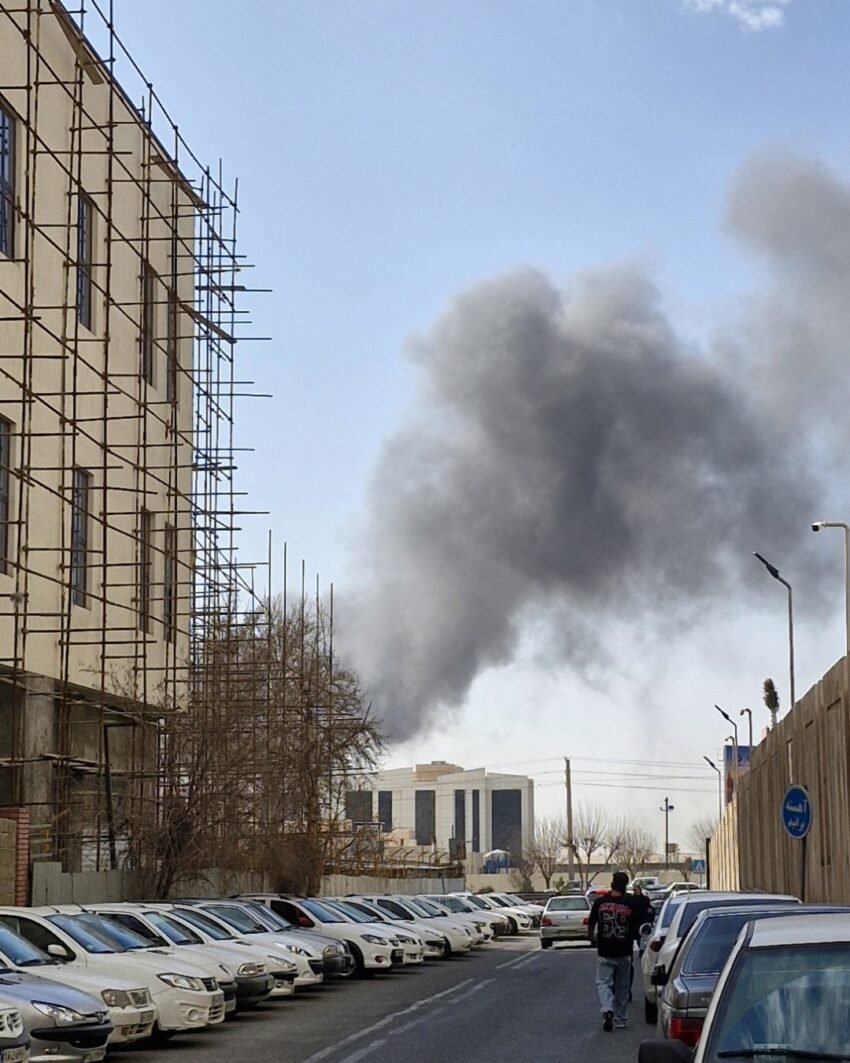
Witnesses reported hearing intense bombardment and seeing large plumes of smoke rising across the city. Some residents have tried to leave the capital while others remain in their homes amid fears of further strikes.
Internet disruptions and communication restrictions have made it difficult for people inside the country to share information, adding to the atmosphere of confusion and anxiety.
Global Economic Concerns
The conflict has also raised serious concerns about global energy supplies.
One of the most important strategic locations affected by the crisis is the Strait of Hormuz, a narrow shipping route through which about 20% of the world’s oil supply passes.
Following the attacks, Iran’s Revolutionary Guard warned ships against passing through the strait, effectively disrupting maritime traffic.
If the waterway were fully blocked, it could cause major disruptions to global oil markets and lead to significant increases in energy prices worldwide.
Political Uncertainty in Iran
Khamenei’s death has also created a power vacuum inside Iran.
Shortly after the attack, officials announced the formation of a temporary leadership council to manage the country during the transition period.
However, analysts believe the struggle for power within Iran’s political and military institutions could lead to further instability. Some experts suggest that a hardline leader connected to the Islamic Revolutionary Guard Corps (IRGC) may eventually replace Khamenei.
The leadership transition could significantly shape Iran’s future policies and its approach to the ongoing conflict.
International Reactions
Governments around the world have reacted with alarm to the developments.
Some countries have urged immediate diplomacy to prevent the conflict from expanding further. Others have increased military readiness to protect their forces and citizens in the region.
Energy markets, shipping companies, and global financial institutions are also closely monitoring the situation due to the potential economic impact.
What Could Happen Next
Experts warn that the situation remains extremely volatile. Possible future developments include:
-
Further Iranian missile or drone attacks
-
Expanded Israeli or U.S. military operations
-
Involvement of regional allies and proxy groups
-
Disruptions to global oil supply routes
Diplomatic efforts may attempt to reduce tensions, but for now the crisis continues to escalate.
Conclusion
The killing of Iran’s supreme leader has triggered one of the most dangerous geopolitical confrontations in recent history. Iran’s warning of “the most intense attack” signals that the conflict may escalate further in the coming days or weeks.
With missile strikes, retaliatory operations, and regional tensions already underway, the world is watching closely to see whether diplomacy can prevent a wider war in the Middle East.