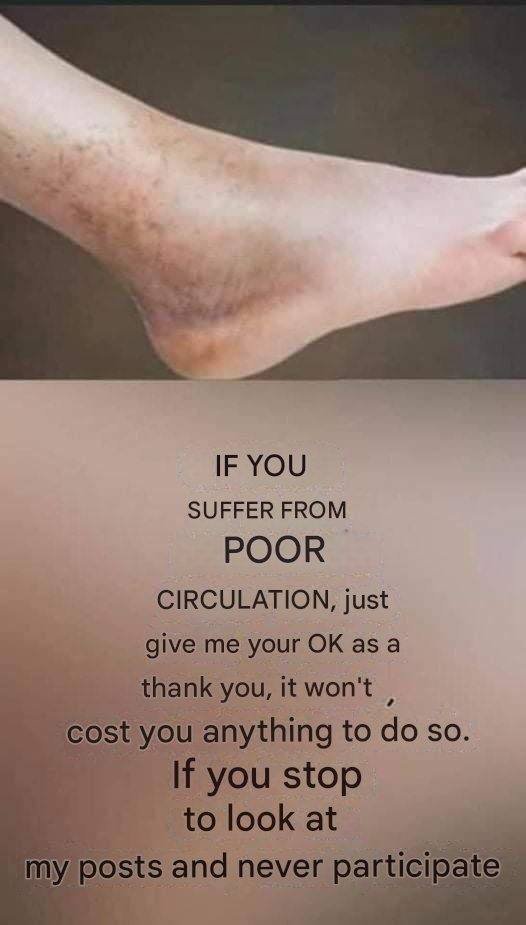
If You Suffer from Poor Circulation and Your Legs Feel Like This, Here Is the Solution
Heavy legs. Tingling. Cold feet. Swelling around the ankles. A dull ache that gets worse after sitting or standing too long.
If your legs often feel tired, numb, restless, or uncomfortable, poor circulation may be playing a role.
Circulation problems are surprisingly common, especially among people who sit for long periods, stand all day, or lead a sedentary lifestyle. While serious circulation disorders require medical care, many mild to moderate symptoms can be significantly improved with the right daily habits and natural support strategies.
Let’s explore what poor circulation in the legs feels like—and what you can do to support healthier blood flow.
Common Signs of Poor Circulation in the Legs
Poor circulation doesn’t look the same for everyone, but common symptoms include:
-
Cold feet or lower legs
-
Tingling or numbness
-
Swelling in the ankles or calves
-
Heaviness or fatigue in the legs
-
Cramping or aching, especially at night
-
Skin discoloration or dryness
-
Restless leg sensations
These symptoms often worsen after long periods of sitting, standing, or inactivity.
Why Circulation in the Legs Matters
Your circulatory system delivers oxygen and nutrients to tissues and removes waste products. The legs, being farthest from the heart, depend heavily on:
-
Muscle movement
-
Healthy blood vessels
-
Adequate hydration
-
Proper nerve signaling
When circulation is sluggish, tissues receive less oxygen, leading to discomfort and fatigue.
What Causes Poor Circulation?
Several factors can contribute, including:
-
Prolonged sitting or inactivity
-
Standing for long hours
-
Aging
-
Dehydration
-
Excess body weight
-
Smoking
-
Tight clothing or footwear
-
Certain medical conditions (which should be evaluated by a doctor)
The good news is that daily lifestyle choices can make a noticeable difference.
The Solution: Supporting Circulation Naturally and Safely
Improving circulation is not about one miracle fix—it’s about consistent habits that encourage healthy blood flow.
1. Move Your Legs Frequently
Movement is the most powerful circulation booster.
Simple actions help:
-
Walking for 10–15 minutes daily
-
Calf raises while standing
-
Ankle circles while sitting
-
Stretching every 30–60 minutes
Muscle contractions act like pumps, pushing blood back toward the heart.
2. Elevate Your Legs
Raising your legs above heart level for 15–20 minutes a day helps reduce swelling and supports venous return. This is especially helpful in the evening after a long day.
3. Improve Hydration
Blood is largely made of water. Dehydration thickens the blood, making circulation less efficient.
Aim to:
-
Drink water consistently throughout the day
-
Limit excessive caffeine and alcohol
4. Support Circulation Through Nutrition
Certain nutrients are known to support blood vessel health:
-
Omega-3 fatty acids (fatty fish, flaxseeds)
-
Magnesium (leafy greens, nuts)
-
Vitamin C (citrus, berries)
-
Antioxidants (colorful fruits and vegetables)
A balanced diet supports vascular elasticity and blood flow.
5. Gentle Massage and Warmth
Massage stimulates circulation by encouraging blood movement through tissues.
Helpful options include:
-
Self-massage of calves and feet
-
Warm foot baths
-
Alternating warm and cool water
These techniques can relieve heaviness and tension.
6. Wear Comfortable, Non-Restrictive Clothing
Tight socks, pants, or shoes can restrict blood flow. Choose footwear and clothing that allow free movement, especially if you’re on your feet all day.
Compression stockings may help some individuals when recommended by a healthcare professional.
7. Prioritize Rest and Sleep
Poor circulation symptoms often worsen when the body is fatigued. Quality sleep supports nervous system regulation and vascular health.
When to Seek Medical Advice
While lifestyle changes can help mild symptoms, consult a healthcare professional if you experience:
-
Persistent or worsening pain
-
Severe swelling
-
Skin ulcers or color changes
-
Sudden numbness or weakness
These may indicate underlying conditions requiring medical evaluation.
Consistency Is the Real Solution
Improving circulation is not about quick fixes—it’s about daily support. Small actions, practiced consistently, often lead to noticeable improvements in comfort, warmth, and leg energy over time.
If your legs feel heavy, tired, or uncomfortable, your body may simply be asking for movement, hydration, and better support.