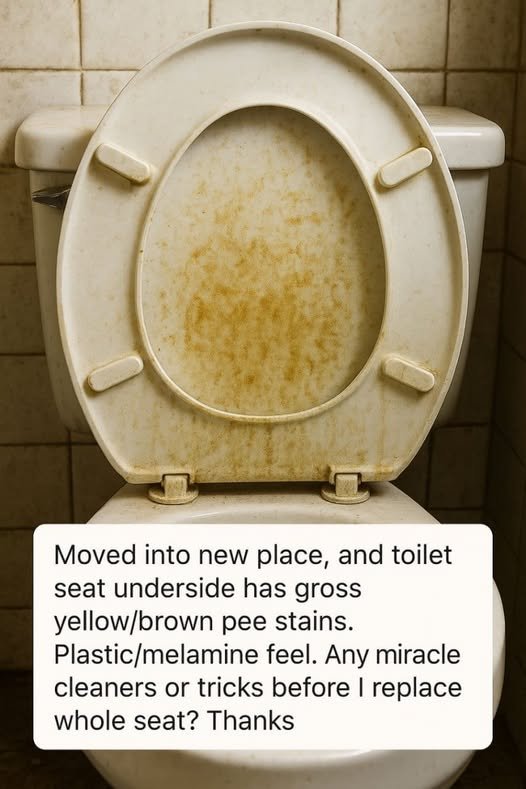
How to Remove Yellow-Brown Stains From a Plastic Toilet Seat (Before You Replace It)
Over time, plastic toilet seats can develop yellow or brown stains that make the bathroom look less clean—even if it’s regularly maintained. These stains often appear due to hard water minerals, urine residue, cleaning product buildup, or natural aging of the plastic.
Before you decide to replace the seat entirely, it’s worth trying a few simple cleaning methods. Many common household ingredients can help restore the seat’s appearance and remove stubborn discoloration.
Why Plastic Toilet Seats Turn Yellow or Brown
Understanding the cause of the stains can help you choose the best cleaning method. Common reasons include:
- Mineral deposits from hard water
- Urine buildup over time
- Cleaning chemical residue
- Moisture and bacteria accumulation
- Plastic oxidation or aging
While some discoloration may be permanent if the plastic has degraded, many stains can be significantly reduced with the right cleaning approach.
Method 1: Baking Soda and Vinegar
This natural combination is often effective for breaking down stains and neutralizing odors.
What You Need
- ½ cup baking soda
- White vinegar
- Soft sponge or cloth
- Old toothbrush
Steps
- Sprinkle baking soda directly over the stained areas.
- Spray or pour a small amount of vinegar over the baking soda.
- Let the mixture fizz and sit for 10–15 minutes.
- Scrub gently with a sponge or toothbrush.
- Rinse with warm water and wipe dry.
This method works well for light to moderate staining and helps remove residue without harsh chemicals.
Method 2: Hydrogen Peroxide
Hydrogen peroxide is commonly used for whitening surfaces and removing organic stains.
What You Need
- 3% hydrogen peroxide
- Paper towels or cloth
- Plastic wrap (optional)
Steps
- Soak paper towels in hydrogen peroxide.
- Place them directly on the stained areas.
- Cover with plastic wrap to keep them moist.
- Let sit for 30–60 minutes.
- Remove and wipe clean with warm water.
This technique can help lighten yellow stains and restore the seat’s brightness.
Method 3: Baking Soda Paste
For tougher stains, a thicker paste can provide stronger cleaning action.
What You Need
- Baking soda
- Water
- Scrub sponge
Steps
- Mix baking soda with a small amount of water to create a thick paste.
- Spread the paste over the stained areas.
- Allow it to sit for 20–30 minutes.
- Scrub gently using a sponge or soft brush.
- Rinse thoroughly and dry.
Baking soda works as a mild abrasive, helping remove buildup without scratching most plastic surfaces.
Method 4: Dish Soap and Warm Water
Sometimes stains are simply caused by residue and can be removed with basic cleaning.
Steps
- Mix warm water with a few drops of dish soap.
- Scrub the seat with a sponge or soft brush.
- Pay extra attention to hinges and edges where buildup often collects.
- Rinse and dry.
This method is ideal for routine maintenance and preventing future stains.
Helpful Cleaning Tips
- Avoid abrasive scrubbers like steel wool, which can scratch plastic.
- Test cleaners on a small area first to prevent damage or discoloration.
- Clean regularly to prevent stains from becoming permanent.
- Wipe the seat dry after cleaning to avoid moisture buildup.
When It’s Time to Replace the Seat
If stains remain even after thorough cleaning, the plastic may have permanently changed color due to aging or chemical reactions. In that case, replacing the seat might be the best solution.
Fortunately, toilet seats are relatively inexpensive and easy to install.
Preventing Future Stains
To keep your toilet seat looking clean:
- Wipe the seat regularly with mild cleaner.
- Address spills or splashes quickly.
- Avoid harsh bleach products that can discolor plastic.
- Keep the bathroom well ventilated to reduce moisture buildup.
Final Thoughts
Yellow-brown stains on plastic toilet seats are common, but they don’t always mean you need to replace the seat immediately. Simple household solutions like baking soda, vinegar, hydrogen peroxide, and mild soap can often remove or lighten discoloration effectively.