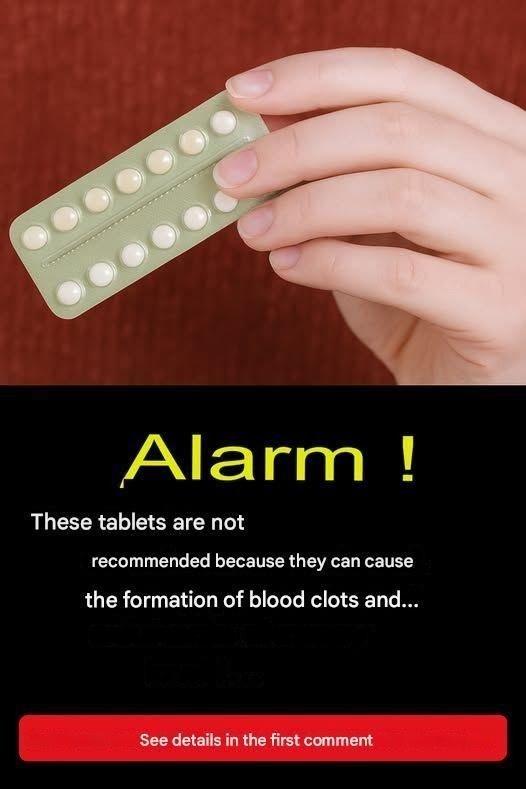
WARNING: These Tablets May Increase the Risk of Blood Clots – What You Need to Know
Certain medications—especially some hormonal and prescription drugs—have been associated with an increased risk of developing dangerous blood clots. While these medicines can be highly effective for their intended use, it’s important to understand the potential risks and use them under proper medical guidance.
This article explains which types of tablets may be linked to blood clots, why this happens, and how to protect yourself.
What Are Blood Clots?
A blood clot is a clump of blood that has changed from liquid to a gel-like state. While clotting is a normal process that prevents excessive bleeding, abnormal clots can form inside veins or arteries and block blood flow.
Serious clot-related conditions include:
- Deep Vein Thrombosis (DVT)
- Pulmonary Embolism (PE)
- Stroke or heart attack in severe cases
These conditions can become life-threatening if not treated quickly.
Tablets Commonly Linked to Blood Clot Risk
Some medications have been studied for their potential to increase clotting risk, particularly in certain individuals.
1. Hormonal Contraceptive Pills
Birth control pills containing estrogen—such as combined oral contraceptives—are among the most commonly associated with clot risk. Estrogen can affect how blood coagulates, making clots more likely in some users.
2. Hormone Replacement Therapy (HRT)
Used during menopause, hormone therapy may also increase clotting risk, especially in higher doses or long-term use.
3. Certain Cancer Medications
Some treatments used in cancer therapy can raise the risk of clot formation due to their effects on blood and vessel function.
4. Other Medications
In some cases, drugs that affect circulation, inflammation, or blood chemistry may contribute to clot risk—especially when combined with other medications.
Why Do These Tablets Increase Risk?
The main reason is how certain medications influence the body’s clotting system.
They may:
- Increase clotting factors in the blood
- Reduce natural anticoagulant activity
- Affect blood flow and vessel health
This creates an imbalance that can make clot formation more likely.
Who Is Most at Risk?
Not everyone who takes these tablets will develop blood clots. However, risk increases if you:
- Are over 35 years old
- Smoke cigarettes
- Are overweight or obese
- Have a personal or family history of clotting disorders
- Sit for long periods (e.g., long travel or sedentary lifestyle)
- Have recently had surgery or injury
- Are pregnant or postpartum
Understanding your personal risk factors is essential before starting any medication.
Warning Signs You Should Never Ignore
If you are taking medications associated with clot risk, seek medical help immediately if you experience:
- Swelling, pain, or redness in one leg
- Sudden shortness of breath
- Chest pain that worsens with breathing
- Rapid heartbeat
- Unexplained coughing or coughing up blood
- Severe headache or vision changes
These could be signs of serious conditions like Deep Vein Thrombosis or Pulmonary Embolism.
How to Reduce Your Risk
While these risks sound alarming, there are practical steps you can take to stay safe:
1. Talk to Your Doctor
Always discuss your medical history before starting any medication. Your doctor can recommend safer alternatives if needed.
2. Avoid Smoking
Smoking significantly increases the risk of blood clots, especially when combined with hormonal medications.
3. Stay Active
Regular movement improves circulation and reduces clot risk. Avoid sitting for long periods.
4. Maintain a Healthy Weight
Healthy lifestyle habits can lower overall risk.
5. Follow Dosage Instructions
Never exceed prescribed doses or combine medications without medical advice.
Important Reminder
These medications are still widely used because their benefits often outweigh the risks for many people. The goal is not to create fear, but to promote informed and safe use.
Never stop taking prescribed medication suddenly without consulting your healthcare provider.
Final Thoughts
Some tablets—especially those containing hormones—can increase the risk of blood clots, but the level of risk varies from person to person. By understanding the warning signs, knowing your risk factors, and working closely with your doctor, you can use medications safely and effectively.