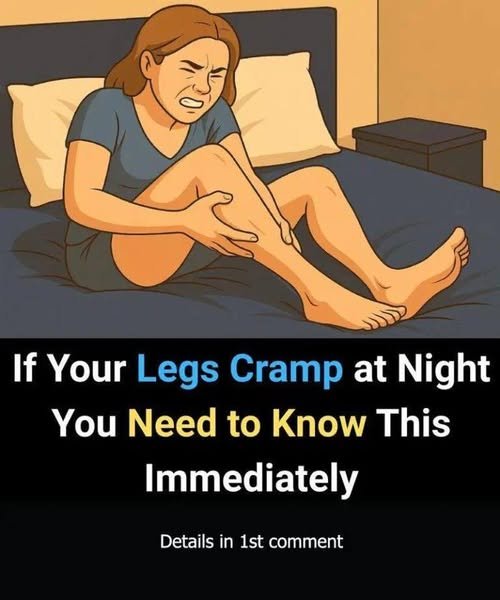
If Your Legs Cramp at Night, You Need to Know This Immediately
Leg cramps at night—often called nocturnal leg cramps—can be painful, sudden, and disruptive to your sleep. While occasional cramps may be harmless, frequent nighttime cramps can signal an underlying health issue or a deficiency that needs attention. Understanding why they happen and how to prevent them can save you from restless nights and discomfort.
What Are Nighttime Leg Cramps?
A leg cramp is a sudden, involuntary contraction of a muscle, usually in the calf, foot, or thigh. These cramps can last from a few seconds to several minutes, causing sharp pain that often wakes you from sleep.
Common Causes
- Dehydration
- Not drinking enough water can lead to electrolyte imbalances, which make muscles more prone to cramping.
- Electrolyte Deficiencies
- Low levels of magnesium, potassium, or calcium are often linked to muscle cramps.
- Muscle Fatigue or Overuse
- Exercising intensely, standing for long periods, or sitting in one position too long can trigger cramps.
- Poor Circulation
- Reduced blood flow to the legs can increase the risk of cramping.
- Medications
- Some diuretics, statins, or blood pressure medications may contribute to muscle cramps.
- Medical Conditions
- Diabetes, nerve disorders, and thyroid issues can sometimes cause frequent leg cramps.
How to Stop a Leg Cramp Immediately
When a cramp strikes:
- Stretch the muscle
- For a calf cramp: Stand up and lean against a wall, or flex your toes upward toward your knee.
- Massage
- Gently rub the affected muscle to relax it.
- Apply Heat or Cold
- Heat can relax tight muscles; cold can reduce pain.
Prevention Tips
- Stay Hydrated
- Drink plenty of water throughout the day.
- Balance Electrolytes
- Eat foods rich in potassium (bananas, oranges), magnesium (nuts, seeds), and calcium (dairy, leafy greens).
- Stretch Before Bed
- Stretch your calves, hamstrings, and thighs for 5–10 minutes before sleep.
- Avoid Overexertion
- Moderate exercise and avoid prolonged sitting or standing.
- Proper Footwear
- Supportive shoes help reduce leg strain during the day.
- Check Medications
- Talk to your doctor if your medications may contribute to cramps.
Natural Remedies That May Help
- Magnesium Supplements – Can improve muscle relaxation.
- Epsom Salt Baths – Warm baths with Epsom salts help relax muscles.
- Essential Oils – Oils like peppermint or lavender may provide relief when massaged into sore muscles.
- Herbal Teas – Chamomile or ginger tea can support circulation and relax muscles.
When to See a Doctor
Consult a healthcare professional if:
- Leg cramps are frequent or severe
- Cramps are accompanied by swelling, redness, or numbness
- You have underlying medical conditions like diabetes or vascular problems
A doctor may recommend blood tests, medication adjustments, or other treatments.
Bottom Line
Nighttime leg cramps can disrupt sleep and cause significant discomfort, but most cases are preventable with proper hydration, diet, stretching, and lifestyle adjustments. Paying attention to your body, stretching before bed, and ensuring balanced electrolytes can reduce cramps and improve sleep quality.