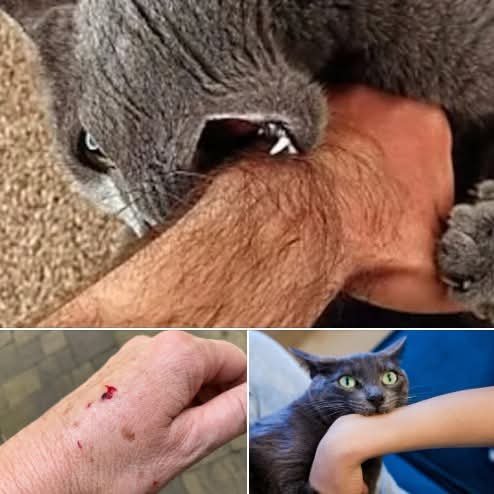
If a Cat Bites You, Here’s What It Really Means
A cat bite can feel confusing—one moment your cat seems calm or even affectionate, and the next, you’re on the receiving end of a quick nip. But in most cases, a cat bite isn’t random or “mean.” It’s a form of communication. Understanding why cats bite can help you respond appropriately and strengthen your relationship with your feline companion.
1. Overstimulation (The Most Common Reason)
Cats enjoy affection, but only up to a point. When petting goes on too long or becomes too intense, they can become overstimulated.
Signs before a bite:
- Tail flicking or thumping
- Ears turning sideways or backward
- Skin rippling along the back
- Sudden tension in the body
What the bite means:
“Okay, that’s enough.”
This type of bite is usually quick and not meant to cause harm—just a clear signal to stop.
2. Play Aggression
Cats, especially kittens and young cats, often use their mouths during play. If they weren’t properly trained or socialized, they may see your hands as toys.
What the bite means:
“I’m playing!”
These bites may be accompanied by pouncing, grabbing, or kicking with the back legs.
Tip:
Avoid using your hands as toys. Use wand toys or balls instead to redirect that playful energy.
3. Fear or Feeling Threatened
If a cat feels scared or cornered, biting becomes a defense mechanism.
Common triggers:
- Loud noises
- Unfamiliar people or animals
- Sudden movements
- Being picked up against their will
What the bite means:
“I’m scared—stay away.”
These bites can be more serious because the cat is trying to protect itself.
4. Pain or Discomfort
Cats often hide pain well. If a normally gentle cat suddenly starts biting, it could be a sign something is wrong.
What the bite means:
“You’re hurting me” or “Something doesn’t feel right.”
If this behavior appears suddenly, it’s worth considering a visit to a veterinarian.
5. Territorial Behavior
Cats can be protective of their space, food, or even certain people.
What the bite means:
“This is mine—back off.”
This may happen when you reach into their space unexpectedly or try to move them.
6. Love Bites (Yes, It’s a Thing!)
Sometimes cats give gentle nibbles during affectionate moments.
What the bite means:
“I like you.”
These bites are usually soft, don’t break the skin, and may happen while your cat is grooming you or cuddling.
What You Should Do If a Cat Bites You
- Stay calm: Don’t yell or hit the cat—this increases fear and aggression
- Stop interaction: Give the cat space immediately
- Clean the wound: Wash thoroughly with soap and water
- Monitor for infection: Cat bites can get infected easily—seek medical help if redness, swelling, or pain increases
How to Prevent Future Bites
- Learn your cat’s body language
- Keep play sessions appropriate with toys, not hands
- Respect their boundaries
- Avoid forcing interaction
- Provide regular play and stimulation to reduce pent-up energy
Final Thoughts
A cat bite is rarely about aggression in the way humans think of it—it’s usually communication. Whether your cat is overstimulated, playful, scared, or even affectionate, the key is to understand the context and respond accordingly.
By paying attention to your cat’s signals and respecting their limits, you can build trust and reduce the chances of bites—creating a happier and safer bond for both of you.