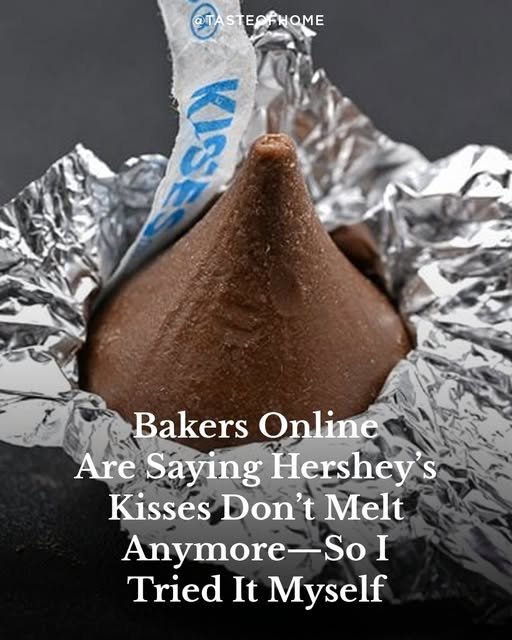
Bakers Online Are Saying Hershey’s Kisses Don’t Melt Anymore—So I Tried It Myself
If you’ve ever baked with Hershey’s Kisses, you know the joy of seeing them melt into gooey chocolate perfection. They’ve long been a staple in brownies, cookies, and even the classic “kiss-topped” peanut butter blossoms. But recently, something curious has been happening in the baking world: bakers online are claiming that Hershey’s Kisses no longer melt like they used to. Naturally, I had to see it for myself.
The Viral Baking Mystery
Scrolling through baking forums and social media, I noticed a growing number of posts from frustrated home bakers. Many were attempting recipes that traditionally relied on melting Hershey’s Kisses—such as chocolate-dipped treats, fudge, and cookie toppings—only to discover that the chocolate refused to melt. Some described it as “stiff,” “grainy,” or “seizing instantly.”
The claims sparked a debate: Was it a change in the chocolate formula? A batch issue? Or just a matter of technique?
My Experiment
To investigate, I purchased three different bags of classic milk chocolate Hershey’s Kisses from my local grocery store. My plan was simple: try melting them in three common methods bakers use.
1. Double Boiler Method
I placed the Kisses in a heatproof bowl over simmering water. Traditionally, this method gently melts chocolate without burning it. To my surprise, after five minutes of gentle stirring, the chocolate barely softened and began forming small clumps.
2. Microwave Method
Next, I microwaved a handful of Kisses in 20-second intervals, stirring between each session. Again, I encountered resistance. The chocolate softened slightly but refused to form a smooth liquid, instead becoming grainy and thick.
3. Oven Method
Finally, I tried placing the Kisses in a small oven-safe dish at a low temperature (200°F / 93°C). Even with slow heating, the Kisses melted unevenly. Some began to burn around the edges while the center stayed surprisingly solid.
What’s Going On With Hershey’s Kisses?
After some research, I discovered that Hershey’s chocolate formulas have indeed evolved over time. Modern Kisses contain emulsifiers, stabilizers, and milk solids designed to improve shelf life, maintain shape, and prevent blooming (the white streaks sometimes seen on older chocolate).
While these changes make Kisses perfect for candy bags and snacking, they affect how easily the chocolate melts. Traditional recipes calling for classic, easily-melted chocolate may need adjustments to work with today’s version.
Some bakers suggest that the higher fat content in older formulations is what made them melt so smoothly in recipes. Today’s Kisses are more stable, so they hold their shape better—but resist melting when heated.
Baking Tips When Kisses Don’t Melt
If you still want to use Hershey’s Kisses in your baking, here are some tips I learned from my experiments:
-
Chop the Kisses First – Cutting them into smaller pieces helps them melt more evenly.
-
Add Fat – Mixing in a small amount of butter, cream, or oil can help the chocolate melt smoothly.
-
Use Low, Gentle Heat – Avoid high temperatures; slow melting prevents seizing.
-
Consider Alternative Chocolate – For recipes requiring fully melted chocolate, bars or chips designed for melting might work better.
-
Microwave with Caution – Short bursts (10–15 seconds) and frequent stirring help, but expect a slower melt.
My Verdict
After trying these methods and adding a little butter to the Kisses in the double boiler, I was able to get a usable melted chocolate. However, it required more patience and adjustments than traditional recipes might suggest.
It seems that Hershey’s Kisses today are more resistant to melting by design, which explains why so many bakers are noticing the difference. They still work beautifully as toppings, in cookies, or eaten straight from the bag—but if your recipe calls for fully melted chocolate, you may need to adapt.
What This Means for Bakers
The takeaway is simple: Hershey’s Kisses are evolving, and so must our baking techniques. Recipes written decades ago may not behave exactly the same with today’s chocolate. This doesn’t mean you can’t use them—it just means adjustments are necessary.
Bakers who rely on melted chocolate for ganache, fudge, or drizzles might consider:
-
Using chocolate bars or melting chips instead of Kisses.
-
Incorporating fat (like butter or cream) to achieve smooth melting.
-
Allowing more time for gentle melting rather than rushing with heat.
Final Thoughts
Baking is all about experimentation, and my trial with Hershey’s Kisses proved that even small ingredient changes can impact a recipe. While Kisses may not melt exactly like they once did, understanding why and adapting your technique allows you to still create delicious, chocolatey desserts.
So, the next time you see a recipe calling for melted Hershey’s Kisses, remember: patience and the right method are key. And who knows? You might discover a new twist on a classic treat while you experiment.
Whether you’re making peanut butter blossoms, fudge, or chocolate-dipped pretzels, Hershey’s Kisses still bring that iconic chocolate flavor we all love—they just need a little more TLC in the melting department.