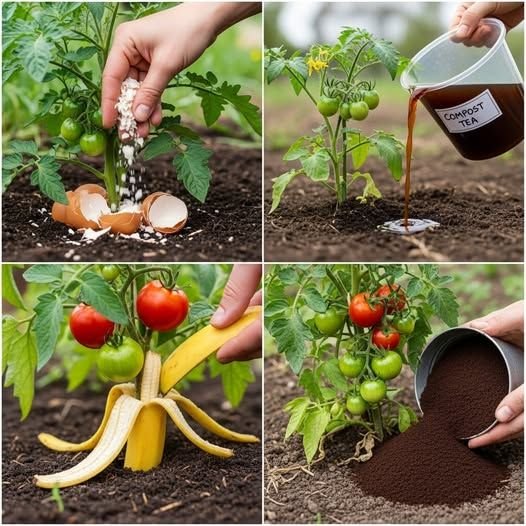
10 Time More Tomatoes! These Fertilizers Changed EVERYTHING for My Tomatoes
If your tomato plants look healthy but only produce a handful of fruits, you’re not alone. For years, I struggled with weak harvests, small tomatoes, and plants that just never reached their full potential. I watered consistently, gave them sun, and even rotated crops—yet the results were disappointing.
Everything changed when I stopped guessing and started feeding my tomatoes the right fertilizers at the right time.
The difference was dramatic. Taller plants. Thicker stems. Dark green leaves. And most importantly—a massive increase in flowers and fruit set. While “10 times more tomatoes” sounds extreme, the yield increase compared to my earlier seasons was honestly shocking.
Here’s exactly which fertilizers made the biggest difference—and how to use them correctly.
Why Tomatoes Need More Than Just Soil
Tomatoes are heavy feeders. They grow fast, produce continuously, and demand large amounts of nutrients throughout the season. Garden soil alone—even good soil—usually cannot keep up.
Tomatoes require:
-
Nitrogen (N) for leafy growth
-
Phosphorus (P) for roots and flowers
-
Potassium (K) for fruit development
-
Calcium, magnesium, and trace minerals to prevent disease and blossom-end rot
Once I understood this, everything clicked.
1. Compost: The Foundation of Explosive Growth
Before any fertilizer, compost is non-negotiable.
I mix 2–3 inches of finished compost into the soil before planting. Compost improves soil structure, boosts microbial life, and slowly releases nutrients all season long.
Results I noticed:
-
Stronger root systems
-
Better water retention
-
Healthier plants with less stress
Think of compost as the base layer that makes every other fertilizer work better.
2. Fish Emulsion: The Growth Accelerator
Fish emulsion was a game-changer early in the season.
This organic liquid fertilizer is rich in nitrogen and trace elements, making it perfect for young tomato plants establishing themselves.
How I use it:
-
Dilute according to label instructions
-
Apply every 10–14 days until flowering begins
What it did:
-
Faster growth
-
Thick, sturdy stems
-
Deep green leaves
Pro tip: Fish emulsion smells terrible—but tomatoes absolutely love it.
3. Bone Meal: Bigger Roots, More Flowers
Once my plants were established, I added bone meal to boost phosphorus levels.
Phosphorus is essential for:
-
Root expansion
-
Flower formation
-
Early fruit development
I worked bone meal into the soil at planting time and lightly side-dressed mid-season.
The result? More blossoms—and blossoms mean tomatoes.
4. Epsom Salt: A Secret Weapon for Magnesium
This was one of the biggest surprises.
Tomatoes often suffer from magnesium deficiency, which limits photosynthesis and fruit production. Epsom salt (magnesium sulfate) fixed this almost immediately.
How I apply it:
-
1 tablespoon per gallon of water
-
Foliar spray or soil drench once a month
After using it, leaf color improved and fruit production noticeably increased.
5. Banana Peels & Potassium Boosters
Potassium is critical for fruit size, flavor, and overall yield.
I used:
-
Dried banana peel powder mixed into soil
-
Organic potassium fertilizers during flowering
Potassium made my tomatoes:
-
Larger
-
Firmer
-
Sweeter
This is where production really exploded.
6. Calcium Fertilizer: No More Blossom-End Rot
Blossom-end rot used to ruin a chunk of my harvest every year. Adding calcium solved it.
I used crushed eggshells and a liquid calcium supplement, especially during fruit set.
Healthy calcium levels meant:
-
Stronger cell walls
-
Fewer damaged fruits
-
Longer-lasting tomatoes
7. Timing Changed Everything
Fertilizer alone isn’t enough—timing matters.
Here’s the schedule that transformed my harvest:
-
Early growth: Nitrogen-rich fertilizers
-
Pre-flowering: Phosphorus support
-
Flowering & fruiting: Potassium and calcium
-
Mid-season boost: Magnesium and trace minerals
Once I matched nutrients to growth stages, yields skyrocketed.
Common Mistakes to Avoid
❌ Over-fertilizing with nitrogen (leads to leaves, not fruit)
❌ Ignoring micronutrients
❌ Feeding on a random schedule
❌ Using one fertilizer all season
Balance is the key.
The Final Results
By the end of the season:
-
Plants were taller and stronger
-
Flower drop was minimal
-
Fruit production was continuous
-
Harvests were dramatically larger than previous years
Did I literally count 10 times more tomatoes? No—but compared to my old results, it felt like it.
Final Thoughts
If your tomato plants aren’t producing like you hoped, the solution may not be more sun or more water—it may be better nutrition.
The right fertilizers, applied at the right time, can completely transform your garden. Once I stopped guessing and started feeding my tomatoes intentionally, everything changed.