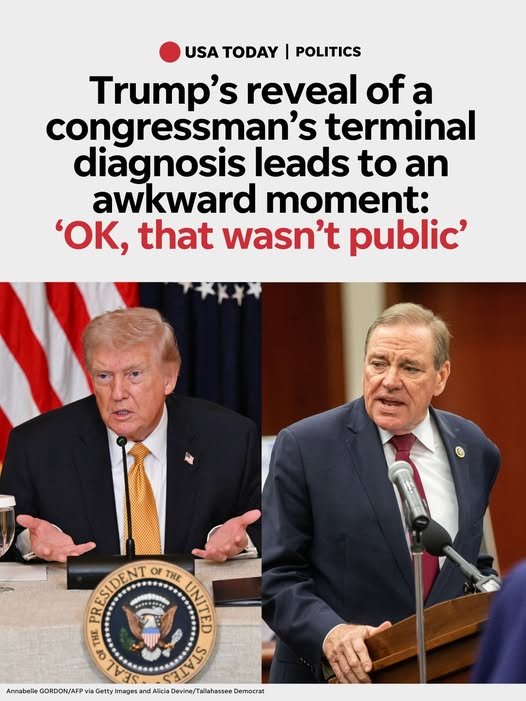
Donald Trump Says GOP Lawmaker Would Have Been “Dead by June” in Awkward Moment
Former U.S. president Donald Trump recently sparked discussion after making a striking comment about a Republican lawmaker during a public appearance. The remark, which included the phrase that the legislator would have been “dead by June” under certain circumstances, quickly drew attention online and across political media, creating an awkward moment that fueled debate about the context and meaning of his words.
While the statement was made during a broader conversation about political loyalty and campaign support, critics and supporters alike reacted strongly. The incident highlights how off-the-cuff remarks in political settings can quickly become major talking points in modern media and political discourse.
The Context of the Comment
The comment reportedly occurred during a public event where Donald Trump was discussing Republican lawmakers and their roles in recent political developments. During the conversation, he referenced a GOP legislator and suggested that without certain actions or support, the individual’s political career—or prospects—would have been effectively finished by the middle of the year.
Although the phrasing used the word “dead,” observers widely interpreted the remark as political hyperbole rather than a literal threat. In political rhetoric, similar expressions are often used to describe the end of a campaign or career rather than physical harm.
However, the blunt wording created an uncomfortable moment during the event, prompting reactions from those present and later online.
Immediate Reactions
Political remarks from high-profile figures frequently attract rapid reactions, and this incident was no exception. Social media users and political commentators quickly began sharing clips and interpretations of the statement.
Some supporters argued that the former president was using typical political exaggeration to describe how difficult the lawmaker’s political future would have been without certain alliances or endorsements.
Critics, however, said the phrasing was unnecessarily dramatic and highlighted concerns about the tone of modern political rhetoric.
Regardless of interpretation, the moment demonstrates how statements made during live appearances can be amplified quickly in the digital age.
Political Rhetoric and Hyperbole
Political communication often includes strong language, metaphors, and exaggeration. Expressions like “politically dead,” “career-ending,” or “finished” are common ways politicians describe rivals or challenging situations.
In this context, the phrase used by Donald Trump appears to follow that tradition of hyperbolic political speech.
Nevertheless, language matters in public discourse. High-profile figures are often scrutinized not only for what they say but how they say it. Words can shape public perception, influence supporters, and impact how political debates unfold.
The Role of Media Coverage
The moment also reflects how modern media operates. Short video clips from speeches and events can spread rapidly online, sometimes without full context.
News outlets, commentators, and social media users may interpret or frame remarks differently depending on their political perspectives. As a result, even brief comments can become widely discussed stories.
This dynamic has become increasingly common in contemporary politics, where political figures communicate directly with audiences through rallies, livestreams, and social media platforms.
Political Alliances and Loyalty
Another aspect of the remark relates to the importance of alliances within political parties. Endorsements, campaign support, and party backing can play a major role in determining whether candidates succeed in elections.
When political leaders discuss the success or failure of lawmakers, they sometimes emphasize how critical party support can be for fundraising, voter outreach, and campaign visibility.
Statements like the one made in this situation may reflect ongoing debates about loyalty within political parties and the role of influential figures in shaping election outcomes.
The Broader Political Environment
The incident also illustrates the intense atmosphere that often surrounds modern American politics. Political speeches frequently include dramatic language intended to energize supporters and emphasize key points.
Public figures often use vivid expressions to highlight their views about policy decisions, party dynamics, or electoral strategy. While these rhetorical strategies can capture attention, they can also lead to misunderstandings or controversy when phrases are taken literally or out of context.
Public Reactions and Debate
As with many political moments, reactions were divided. Supporters viewed the comment as a blunt but familiar example of political storytelling and exaggeration. Critics saw it as another example of language that can escalate tensions in political discussions.
This divide reflects broader patterns in political communication, where audiences often interpret statements through the lens of their existing beliefs or affiliations.
In an era where news spreads rapidly through digital platforms, a single comment can quickly become part of a larger national conversation.
Conclusion
The awkward moment involving Donald Trump and his remark about a GOP lawmaker illustrates how quickly political statements can capture public attention. Whether interpreted as hyperbole or controversial wording, the comment highlights the power of language in political discourse.
In modern politics, every speech, interview, or public appearance can generate headlines and debate. As political figures continue to communicate directly with large audiences, their words often shape not only public perception but also the broader narrative surrounding political events.