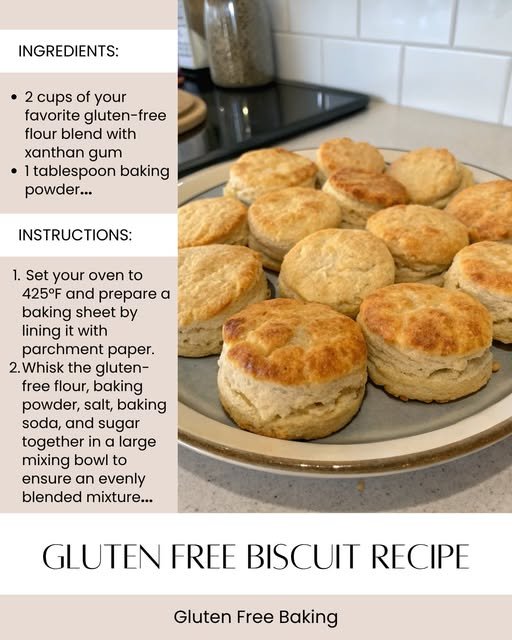
Homemade Gluten-Free Biscuits: Fluffy, Tender, and Irresistible
Nothing beats the aroma of freshly baked biscuits straight from the oven. Fluffy, tender, and golden, they are perfect for breakfast, brunch, or as a side to a hearty meal. For those avoiding gluten, homemade gluten-free biscuits are a wonderful option that doesn’t compromise on taste or texture. With the right combination of gluten-free flours and baking techniques, you can enjoy biscuits that rival traditional ones in every way.
Why Go Gluten-Free?
Gluten-free baking has become increasingly popular, not only for those with celiac disease or gluten sensitivity but also for anyone seeking a lighter, healthier alternative to traditional baked goods. The challenge with gluten-free biscuits is achieving that soft, fluffy texture that gluten naturally provides. The key is to use a proper gluten-free flour blend and add ingredients that provide structure and moisture.
Ingredients You’ll Need
For about 8-10 biscuits, gather the following ingredients:
-
2 cups gluten-free all-purpose flour (with xanthan gum included)
-
1 tablespoon baking powder
-
½ teaspoon baking soda
-
½ teaspoon salt
-
6 tablespoons cold unsalted butter, cubed
-
¾ cup buttermilk (or dairy-free milk with 1 teaspoon vinegar)
-
Optional: 1 teaspoon sugar for slightly sweet biscuits
Step-by-Step Instructions
1. Preheat the Oven
Preheat your oven to 425°F (220°C). Line a baking sheet with parchment paper or lightly grease it with butter.
2. Mix Dry Ingredients
In a large bowl, whisk together the gluten-free flour, baking powder, baking soda, salt, and optional sugar. This ensures even distribution of the leavening agents for perfect rising.
3. Cut in the Butter
Add the cold, cubed butter to the dry ingredients. Using a pastry cutter, two knives, or your fingertips, cut the butter into the flour until the mixture resembles coarse crumbs. The small butter pieces help create flaky layers in the biscuits.
4. Add the Buttermilk
Make a well in the center of the dry mixture and pour in the buttermilk. Stir gently with a spoon until the dough just comes together. Be careful not to overmix, as this can make the biscuits dense. The dough should be slightly sticky but manageable.
5. Shape the Biscuits
Lightly flour your work surface with gluten-free flour. Turn the dough out and gently pat it into a 1-inch thick rectangle. Fold it over once or twice to create layers, which improves flakiness. Use a biscuit cutter or a glass to cut out rounds, pressing straight down without twisting. Gather scraps and repeat until all dough is used.
6. Bake
Place the biscuits on the prepared baking sheet about 1 inch apart. Bake in the preheated oven for 12-15 minutes, or until the tops are golden brown. Avoid opening the oven too early to prevent them from deflating.
7. Serve Warm
Let the biscuits cool slightly before serving. They are best enjoyed warm with butter, honey, jam, or gravy.
Tips for Perfect Gluten-Free Biscuits
-
Use Cold Butter: This creates pockets of steam during baking, resulting in light, flaky biscuits.
-
Don’t Overmix: Gluten-free dough can become dense if overworked. Stir just until combined.
-
Layering Technique: Folding the dough before cutting adds flakiness similar to traditional biscuits.
-
Check Flour Blends: Make sure your gluten-free flour contains xanthan gum or add ½ teaspoon to help bind the dough.
-
Optional Additions: Herbs like rosemary or chives, garlic powder, or shredded cheese can be added for savory biscuits.
Variations to Try
-
Cheese Biscuits: Add ½ cup shredded cheddar or Parmesan to the dough for a savory twist.
-
Herb Biscuits: Mix in fresh chopped herbs such as thyme, parsley, or rosemary.
-
Sweet Biscuits: Add a tablespoon of sugar and a dash of cinnamon for breakfast-friendly biscuits.
-
Dairy-Free: Substitute butter with coconut oil or vegan butter and buttermilk with plant-based milk plus vinegar.
Why These Biscuits Are a Crowd-Pleaser
Homemade gluten-free biscuits are perfect for everyone, regardless of dietary restrictions. Their soft, tender texture and buttery flavor make them versatile enough to pair with:
-
Breakfast: Serve with scrambled eggs, bacon, or sausage.
-
Brunch: Split and fill with egg salad, chicken salad, or smoked salmon.
-
Dinner: A side to soups, stews, or roasted meats.
They also freeze beautifully. Simply cool completely, store in an airtight container, and reheat in the oven for a fresh-baked taste anytime.
Nutritional Benefits
Gluten-free biscuits using whole-grain or blended flours provide fiber, essential minerals, and a lighter option compared to traditional wheat biscuits. When paired with healthy toppings, they offer a balanced and satisfying snack or meal accompaniment.
Final Thoughts
Baking homemade gluten-free biscuits doesn’t have to be complicated. With a few simple ingredients and the right techniques, you can create light, fluffy, and flavorful biscuits that rival traditional versions. They are perfect for any meal of the day, versatile in flavor, and sure to impress both gluten-free eaters and traditional biscuit lovers alike.
Whether served warm with butter and honey for breakfast or alongside a savory dinner, these biscuits are a comforting addition to any table. Homemade, gluten-free, and utterly delicious — they prove that dietary restrictions don’t have to compromise taste or enjoyment.