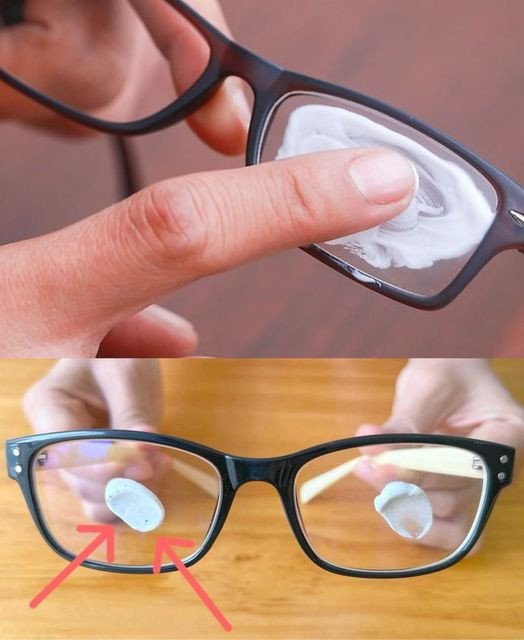
Scratches on Glasses? Don’t Waste Money — Try This Simple Trick First
Scratches on eyeglasses can be frustrating. Even small scratches can make it harder to see clearly and may cause glare or eye strain. Many people assume that once glasses are scratched, the only solution is to replace the lenses. However, before spending money on new glasses, there are a few simple household tricks that may help reduce the appearance of minor scratches.
While deep scratches cannot truly be removed without professional polishing or replacing the lenses, certain simple methods may help fill or soften light surface scratches, making them less noticeable. One of the most popular and widely shared tricks involves using a small amount of toothpaste.
This quick and inexpensive method is often used to polish light marks on glass or plastic lenses.
Why Scratches Appear on Glasses
Eyeglass lenses go through daily wear and tear. Even when you are careful, small particles like dust or sand can cause fine scratches when wiping the lenses.
Common causes include:
-
Cleaning lenses with dry cloths
-
Dropping glasses
-
Storing glasses without a protective case
-
Wiping lenses with clothing
-
Exposure to dust or sand
Over time, these tiny scratches accumulate and can affect visibility.
The Simple Toothpaste Trick
One of the most popular home remedies for light scratches is non-gel toothpaste. The mild abrasive particles in toothpaste can sometimes help polish very small surface scratches.
What You Need
-
A small amount of plain white toothpaste (non-gel)
-
A soft microfiber cloth
-
Clean water
Step-by-Step Instructions
1. Clean the lenses first
Rinse your glasses gently with lukewarm water to remove dust or debris. This step is important because rubbing dust on the lenses can cause more scratches.
2. Apply a small amount of toothpaste
Place a tiny amount of toothpaste on the scratched area. You only need a pea-sized amount.
3. Gently rub the lens
Using a soft microfiber cloth or cotton ball, gently rub the toothpaste on the scratched area in small circular motions for about 10–15 seconds.
Do not press too hard, as excessive pressure can damage the lens coating.
4. Rinse the lenses
Rinse the glasses under lukewarm water to remove the toothpaste completely.
5. Dry carefully
Use a clean microfiber cloth to gently dry the lenses.
In many cases, the scratch may appear less noticeable after this quick polishing process.
Another Household Option: Baking Soda Paste
Another common method involves baking soda.
Ingredients
-
1 teaspoon baking soda
-
A few drops of water
Mix them together to form a thick paste. Apply it gently to the scratched area with a soft cloth, rub lightly, rinse, and dry.
Like toothpaste, baking soda can sometimes help smooth minor surface marks.
Important Warnings
Although these methods are popular online, they are not guaranteed to work for every type of lens.
Keep these precautions in mind:
-
Only use these methods on very light scratches
-
Avoid using them on lenses with delicate coatings
-
Do not rub aggressively
-
Never use rough cloths or tissues
Some modern eyeglass lenses have protective coatings such as anti-glare or scratch-resistant layers. Abrasive substances may damage these coatings if used too often.
Scratches That Cannot Be Fixed at Home
Unfortunately, deep scratches cannot be repaired with home remedies. In these cases, the only reliable solution is replacing the lenses.
Signs that a scratch is too deep include:
-
Visible grooves you can feel with your fingernail
-
Distortion in your vision
-
Large or spreading scratches
If the scratch affects your vision, it’s best to consult an optician.
How to Prevent Future Scratches
The best way to deal with scratched glasses is to prevent them in the first place.
Here are some simple habits that help protect lenses:
Always use a protective case
Store glasses in a hard case when not in use.
Clean with microfiber cloths
Avoid tissues, paper towels, or clothing.
Rinse before wiping
Water removes dust that can scratch lenses.
Avoid placing glasses face down
This prevents direct contact with surfaces.
Use proper lens cleaning solutions
Special lens cleaners are designed to protect coatings.
When to Replace Your Lenses
If scratches become severe or affect your ability to see clearly, replacing the lenses may be the safest option.
Modern lenses often come with:
-
Scratch-resistant coatings
-
Anti-reflective layers
-
UV protection
These features help protect your eyes and keep your vision sharp.
Final Thoughts
Scratches on glasses can be annoying, but before spending money on new lenses, it may be worth trying a simple household trick like the toothpaste method. While these remedies cannot completely remove deep scratches, they may help reduce the appearance of minor surface marks.
The most important step is protecting your glasses with proper cleaning and storage habits. With the right care, your lenses can stay clear and scratch-free for much longer.