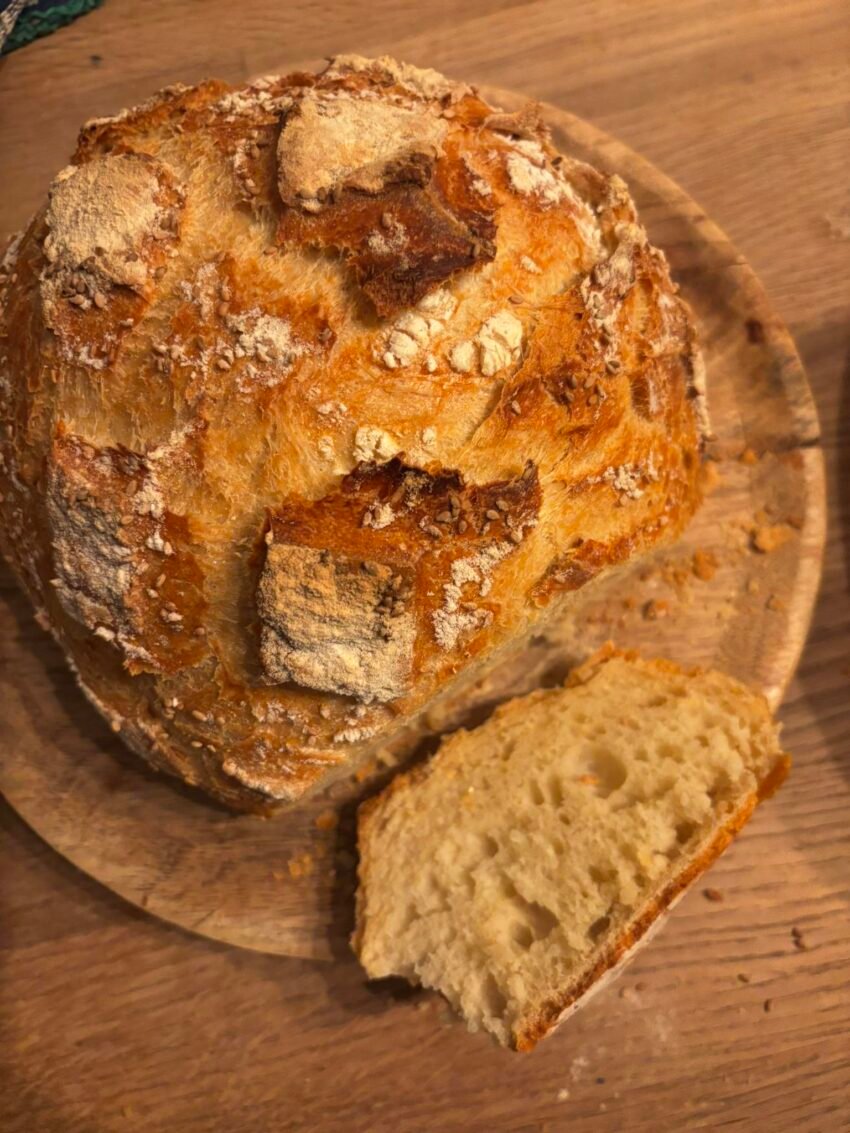
Pain au Levain: Traditional Sourdough Bread
Pain au levain, also known as sourdough bread, is a classic French bread made with a natural yeast starter instead of commercial yeast. This traditional bread has a distinct tangy flavor, a chewy interior, and a crisp, golden crust. It’s prized for its depth of flavor, long fermentation process, and artisanal quality.
Unlike breads made with instant yeast, pain au levain relies on a sourdough starter—a naturally fermented mixture of flour and water that captures wild yeast and beneficial bacteria from the environment. This gives the bread its signature sour aroma and contributes to improved digestibility.
Ingredients
-
500g bread flour
-
325g water, at room temperature
-
100g active sourdough starter
-
10g salt
Optional: A sprinkle of flour for dusting or scoring the bread
Preparing the Sourdough Starter
Before making pain au levain, you need an active sourdough starter. A healthy starter should be bubbly, smell pleasantly sour, and double in size within 4–6 hours after feeding.
If you don’t have a starter, you can create one by mixing equal parts flour and water, feeding it daily, and allowing natural fermentation to occur over 5–7 days.
Instructions
1. Mixing the Dough
-
In a large mixing bowl, combine the sourdough starter with water and mix until dissolved.
-
Add the flour and mix until there are no dry patches. The dough will be shaggy at first.
-
Let the dough rest for 30 minutes (autolyse). This helps hydrate the flour and improves gluten development.
2. Adding Salt
-
Sprinkle salt over the dough and knead gently until incorporated. You can use stretch-and-fold techniques every 30 minutes over 2–3 hours instead of traditional kneading.
3. Bulk Fermentation
-
Cover the dough and let it ferment at room temperature for 3–5 hours, performing a stretch-and-fold every 30–60 minutes during the first half of fermentation.
-
The dough should increase in volume, feel airy, and have visible bubbles.
4. Shaping the Dough
-
Gently remove the dough onto a floured surface.
-
Shape it into a round boule or an oval bâtard, depending on preference.
-
Place it in a floured proofing basket (banneton) or a bowl lined with a floured kitchen towel.
5. Final Proof
-
Cover the shaped dough and let it proof for 1–2 hours at room temperature or refrigerate overnight for a slower, more flavorful fermentation.
6. Scoring and Baking
-
Preheat the oven to 230°C (450°F) with a Dutch oven inside for 30 minutes.
-
Carefully transfer the dough into the hot Dutch oven.
-
Score the top with a sharp knife or razor blade to allow controlled expansion during baking.
-
Bake covered for 20–25 minutes, then uncover and bake for another 20–25 minutes until golden brown and crisp.
7. Cooling
-
Let the bread cool completely on a wire rack before slicing. This allows the crumb to set properly.
Tips for Perfect Pain au Levain
-
Starter Health: A strong, active starter is crucial for good rise and flavor. Feed it regularly.
-
Hydration: Adjust water content depending on flour type; higher hydration produces a more open, airy crumb.
-
Patience: Sourdough requires time. Longer fermentation enhances flavor and texture.
-
Steam: If not using a Dutch oven, create steam in the oven with a tray of water to achieve a crisp crust.
Serving Suggestions
Pain au levain pairs beautifully with:
-
Butter and jam for breakfast
-
Cheese and charcuterie boards
-
Soups and stews
-
Sandwiches with fresh vegetables and deli meats
Benefits of Sourdough Bread
-
Easier to digest due to natural fermentation
-
Lower glycemic response compared to commercial yeast breads
-
Rich flavor and long shelf life without preservatives
Pain au levain is more than just bread—it’s a culinary tradition that celebrates patience, skill, and natural fermentation. Baking your own sourdough at home can be a deeply satisfying experience, offering bread with unmatched flavor, aroma, and texture.