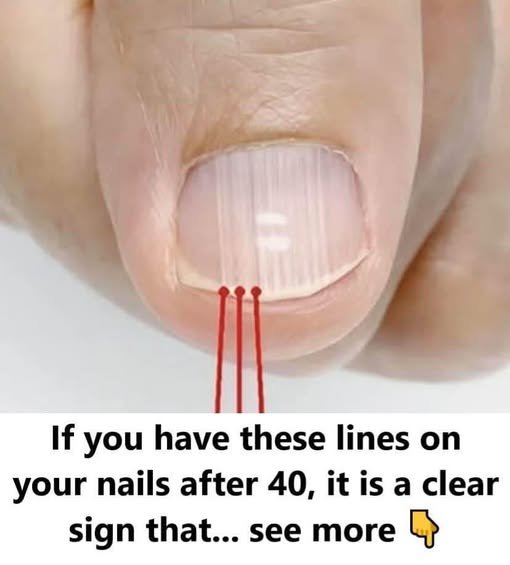
If You Have These Lines on Your Nails After 40, It Is a Clear Sign That Your Body May Need Extra Care
As we age, our bodies go through many subtle changes, and surprisingly, our nails can reveal important clues about our overall health. Many people notice that after the age of 40, small lines or ridges begin to appear on their fingernails. While this can seem alarming at first, these lines are often a natural part of aging. However, in some cases they may also signal nutritional deficiencies, dehydration, or other health changes happening inside the body.
Understanding what these nail lines mean can help you take better care of your health and ensure that your body is getting the nutrients and support it needs. In this guide, we’ll explore why nail lines appear after 40, what they may indicate, and what you can do to keep your nails strong and healthy.
Understanding Nail Lines
Nail lines typically appear in two forms:
Vertical lines (ridges) that run from the base of the nail to the tip.
Horizontal lines, which run across the nail.
Both types can appear after the age of 40, but they can have different meanings.
Vertical Nail Lines
Vertical ridges are the most common type and are usually harmless. They often develop gradually with age as the body’s natural production of oils and moisture decreases. Much like wrinkles in the skin, these lines can simply be a normal part of aging.
However, prominent vertical ridges may sometimes be linked to:
-
Mild dehydration
-
Reduced collagen production
-
Nutritional imbalances
-
Slower nail cell turnover
While these lines are usually not dangerous, they can become more noticeable if your body is lacking important nutrients.
Horizontal Nail Lines
Horizontal lines, often referred to as Beau’s lines, are less common but more significant. These lines can appear when nail growth temporarily slows or stops due to stress on the body.
Possible causes include:
-
Illness or fever
-
Major stress
-
Surgery
-
Nutritional deficiencies
-
Certain medications
If horizontal lines appear suddenly or deeply across several nails, it may be worth discussing with a healthcare professional.
Nutritional Signals Your Nails May Be Sending
After the age of 40, the body sometimes absorbs nutrients less efficiently. As a result, the nails may show subtle signs that certain vitamins or minerals are lacking.
Here are some common nutrients linked to nail health.
Iron
Iron plays a critical role in transporting oxygen through the bloodstream. When iron levels are low, nails may become brittle or develop ridges.
Low iron levels can also cause:
-
Fatigue
-
Pale skin
-
Weak nails
Iron-rich foods include:
-
Spinach
-
Lentils
-
Red meat
-
Pumpkin seeds
-
Beans
Eating iron-rich foods together with vitamin C sources such as citrus fruits can help improve absorption.
Biotin (Vitamin B7)
Biotin is one of the most important nutrients for nail strength. It helps the body produce keratin, the protein that forms nails.
Low biotin levels may lead to:
-
Brittle nails
-
Splitting nails
-
Visible ridges
Foods high in biotin include:
-
Eggs
-
Almonds
-
Walnuts
-
Avocados
-
Sweet potatoes
Including these foods regularly can support stronger nail growth.
Zinc
Zinc helps with cell growth and tissue repair, which are essential for healthy nails.
When zinc levels are low, nails may show white spots or ridges.
Good sources of zinc include:
-
Chickpeas
-
Pumpkin seeds
-
Cashews
-
Oats
-
Whole grains
Protein
Nails are primarily made of keratin, a type of protein. Without enough protein in the diet, nail growth may slow down and ridges can become more visible.
Healthy protein sources include:
-
Chicken
-
Fish
-
Eggs
-
Greek yogurt
-
Beans
-
Tofu
Ensuring you eat enough protein daily can make a noticeable difference in nail strength.
Hydration and Nail Health
Another common reason for nail ridges after 40 is dehydration.
As we age, the body retains less moisture, which can affect both skin and nails. Dehydrated nails may appear dry, brittle, and ridged.
To support healthy nails:
-
Drink 6–8 glasses of water daily
-
Eat water-rich foods like cucumbers and watermelon
-
Use moisturizing hand creams regularly
Keeping nails hydrated helps maintain flexibility and smoothness.
Lifestyle Factors That Affect Nail Appearance
In addition to nutrition and hydration, certain lifestyle habits can influence nail health.
Frequent Hand Washing
While good hygiene is important, excessive hand washing without moisturizing can dry out nails and make ridges more visible.
Harsh Nail Products
Some nail polish removers contain strong chemicals that weaken nails over time.
Stress
Long-term stress can impact the body in many ways, including slowing nail growth.
Aging
The natural aging process slows down cell regeneration, which can make nail ridges more noticeable.
How to Support Healthier Nails After 40
The good news is that small lifestyle changes can greatly improve nail health.
Consider these simple habits:
-
Maintain a balanced diet rich in vitamins and minerals
-
Stay properly hydrated
-
Use gentle nail care products
-
Moisturize hands and cuticles regularly
-
Avoid biting or picking at nails
-
Trim nails regularly to prevent splitting
Over time, these habits can help nails grow stronger and smoother.
When to Seek Medical Advice
In most cases, nail ridges are harmless and simply reflect aging or minor nutritional changes.
However, you should consider speaking with a healthcare professional if you notice:
-
Sudden deep horizontal lines across several nails
-
Nail discoloration
-
Nail separation from the nail bed
-
Rapid changes in nail shape or thickness
These symptoms may sometimes signal underlying health conditions that require evaluation.
Final Thoughts
Your nails can reveal valuable clues about your overall health. After the age of 40, it’s common to notice subtle changes such as vertical ridges or lines appearing on the nails.
While these lines are often a normal part of aging, they can also be a reminder that your body needs proper nutrition, hydration, and care. By focusing on a balanced diet rich in protein, iron, zinc, biotin, and vitamins, you can support stronger, healthier nails from within.
Healthy nails don’t change overnight, but with consistent care and attention, you can improve their appearance and strength over time.