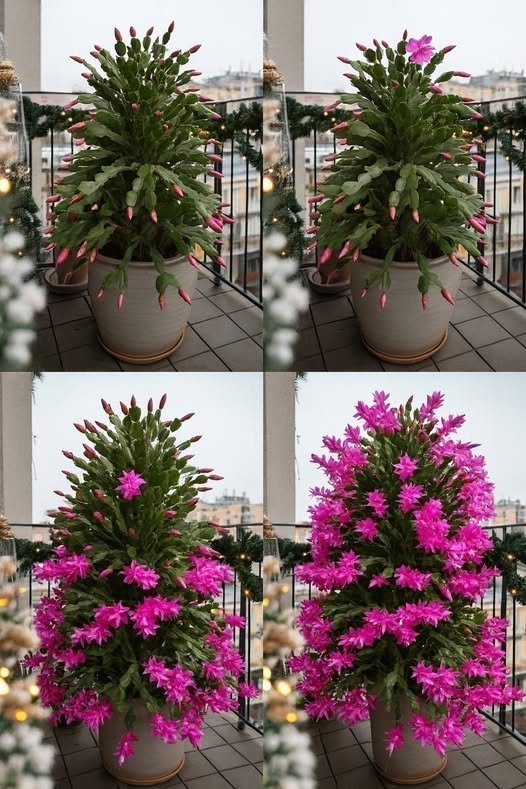
The Secret to Making Your Christmas Cactus Bloom More Flowers 🌵🌸
The Christmas cactus (Christmas cactus) is a beloved holiday houseplant known for its vibrant pink, red, white, or purple blossoms that brighten homes during the winter season. However, many plant owners struggle to get their cactus to bloom consistently each year. If your plant grows well but produces few or no flowers, the issue usually lies in light, temperature, watering, or timing.
The good news is that encouraging a Christmas cactus to bloom isn’t difficult once you understand its natural growth cycle. With a few simple adjustments, you can help your plant produce more buds and longer-lasting blooms, turning it into a stunning centerpiece for the holiday season.
Understanding the Christmas Cactus Bloom Cycle
Unlike desert cacti, the Christmas cactus originates from tropical rainforests in Brazil, where it grows on trees and rocks in shaded, humid environments. Because of this, its needs are very different from typical cacti.
This plant is a short-day plant, meaning it begins forming flower buds when it experiences long nights and cooler temperatures. In nature, this happens naturally in late fall, which is why the plant typically blooms around Christmas.
To encourage flowering indoors, you must mimic these seasonal conditions.
1. Give Your Plant the Right Light
Light plays a major role in bud formation.
Christmas cacti prefer bright but indirect sunlight. A location near an east- or north-facing window works best. Too much direct sun can burn the leaves, while too little light can prevent blooming.
During the day, your plant should receive 6–8 hours of bright indirect light. If your home is dim in winter, moving the plant closer to a window can help stimulate flower production.
However, the real secret lies in darkness at night.
For about 6–8 weeks before blooming season, the plant needs 12–14 hours of uninterrupted darkness each night. Even brief exposure to light during this time can interfere with bud formation.
Many gardeners simply place their plant in a dark room or closet overnight to ensure complete darkness.
2. Lower the Temperature
Another key trigger for flowering is cooler temperatures.
During the bud-forming stage in autumn, keep your Christmas cactus in a room where nighttime temperatures stay around 50–60°F (10–15°C). These cooler conditions signal the plant that winter is approaching, encouraging it to begin forming flower buds.
If the plant is kept in a consistently warm environment, it may continue growing leaves instead of producing flowers.
Once buds appear, you can move the plant back to a warmer room.
3. Adjust Your Watering Routine
Proper watering is essential for healthy blooms.
Unlike desert cacti, the Christmas cactus enjoys slightly moist soil, but it does not tolerate soggy conditions. Overwatering can lead to root rot and poor flowering.
A good rule is to water when the top inch of soil feels dry. During the fall bud-forming period, slightly reducing watering can also encourage flowering.
After buds form, resume normal watering to support bloom development.
4. Provide the Right Humidity
Because Christmas cacti come from tropical environments, they thrive in moderate humidity.
Dry indoor air—especially during winter when heating systems are running—can cause buds to drop before opening.
To increase humidity around your plant, try:
-
Placing a tray of water with pebbles beneath the pot
-
Using a humidifier nearby
-
Grouping plants together to create a more humid microclimate
Maintaining humidity levels around 50–60% can greatly improve flowering success.
5. Avoid Moving the Plant Once Buds Appear
One of the most common mistakes people make is moving the plant after buds form.
Christmas cacti are sensitive to sudden environmental changes. Moving them to a different room, changing light levels, or exposing them to drafts can cause buds to drop before blooming.
Once you notice small buds forming on the tips of the stems, keep the plant in a stable environment with consistent light and temperature.
6. Feed Your Plant for Better Blooms
Fertilizing your plant during its active growth period can also promote better flowering.
From spring through early fall, feed the plant once a month with a balanced houseplant fertilizer diluted to half strength. This encourages healthy growth and prepares the plant for the next blooming season.
However, stop fertilizing in late fall when buds begin forming.
Too much fertilizer during the blooming phase can actually prevent flowers from developing properly.
7. Prune After Blooming
After the flowering season ends, pruning your Christmas cactus can help stimulate new growth and more future blooms.
Simply remove one or two segments from the ends of stems. This encourages the plant to branch out, creating more tips where flowers can form next year.
Pruning also helps maintain a full, attractive shape.
8. Repot Only When Necessary
Christmas cacti actually bloom better when they are slightly root-bound, meaning their roots fill the pot comfortably.
Repotting too often can delay blooming because the plant focuses its energy on root growth instead of flowers.
Most plants only need repotting every 2–3 years, ideally in spring after the blooming season.
Signs Your Christmas Cactus Is Ready to Bloom
When conditions are right, you’ll start to notice tiny buds forming at the tips of the leaf segments. These buds gradually grow larger and eventually open into beautiful flowers.
Once blooming begins, flowers typically last several weeks, making the plant one of the longest-lasting holiday bloomers.
With proper care, a healthy Christmas cactus can bloom every year for decades, often becoming a cherished family heirloom passed down through generations.
Final Thoughts
The secret to getting a Christmas cactus to bloom more flowers is simple: recreate its natural seasonal environment. Provide bright indirect light during the day, long dark nights in the fall, cooler temperatures, and consistent care.
With these small adjustments, your Christmas cactus can reward you with spectacular blooms year after year, filling your home with vibrant color just in time for the holiday season.