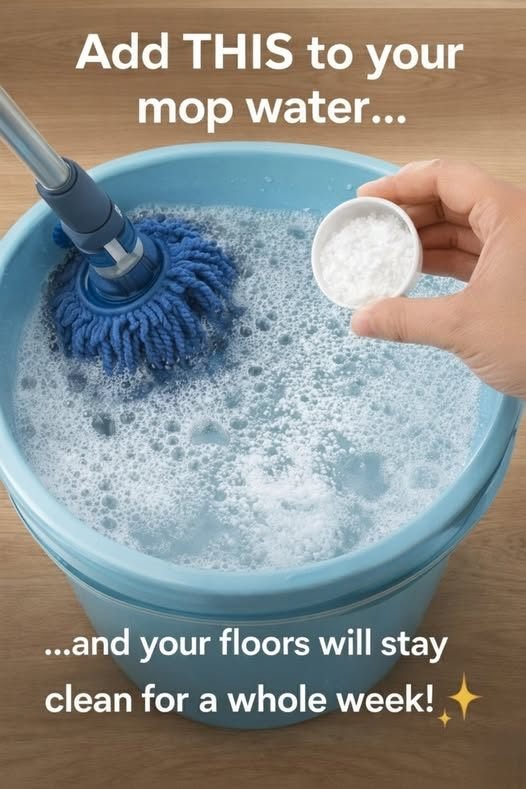
I Didn’t Believe This Floor Trick Until I Tried It — Now I’ll Never Go Back
If you had told me a few months ago that one simple, old-school cleaning trick would completely change how my floors look and feel, I probably would have smiled politely and kept using my usual products.
Like many people, I relied on heavily scented cleaners, expensive multi-surface sprays, and the occasional deep-cleaning session that left me exhausted. My floors would look clean for a day… maybe two. Then the dullness would creep back. Streaks would appear. And high-traffic areas would start looking tired again.
Then I tried this surprisingly simple floor trick — and I haven’t gone back since.
What shocked me most wasn’t just how clean my floors looked. It was how they felt and how long that clean lasted.
Why Most Floors Never Stay Truly Clean
Here’s something most people don’t realize: many commercial floor cleaners leave behind a thin residue.
That residue:
-
Attracts dust
-
Makes floors look cloudy
-
Causes streaking
-
Creates buildup over time
Even when floors look shiny at first, that shine can actually be a layer of leftover product. Over weeks or months, this buildup dulls the surface and makes cleaning feel like a never-ending cycle.
That’s exactly what was happening in my home.
The Simple Floor Trick That Changed Everything
The “trick” is surprisingly basic:
Warm water + white vinegar + proper rinsing.
That’s it.
No complicated formulas. No expensive specialty products. Just a balanced mixture that cuts through residue instead of adding to it.
Why It Works
White vinegar is mildly acidic. That acidity helps:
-
Break down mineral deposits
-
Dissolve soap residue
-
Remove dull buildup
-
Neutralize odors
When diluted properly, it cleans effectively without leaving a film behind.
The Exact Method I Used
Here’s the routine that made the difference:
Step 1: Dry Prep First
Vacuum or sweep thoroughly. Skipping this step just spreads debris around.
Step 2: Mix the Solution
In a bucket:
-
1 gallon warm water
-
½ cup white vinegar
That’s the ideal balance — strong enough to clean, gentle enough for regular use.
Step 3: Use a Damp Mop, Not Soaking Wet
Excess water can damage certain floors. I wring the mop thoroughly so it’s damp, not dripping.
Step 4: Mop in Sections
Work in small areas. This prevents streaking and ensures even coverage.
Step 5: Rinse With Clean Water
This is the part most people skip.
After mopping with the vinegar solution, I quickly go over the floor with plain warm water.
That rinse removes loosened residue instead of letting it dry back onto the surface.
The Results I Noticed Immediately
After the first cleaning, I saw:
-
Brighter color in my floors
-
No cloudy haze
-
Less streaking
-
A smoother feel underfoot
Within a week, I noticed something else: dust didn’t cling as quickly. The sticky film that had been attracting grime was gone.
And the best part? My floors stayed cleaner longer.
What Types of Floors This Works Best On
This method works especially well on:
-
Tile
-
Vinyl
-
Laminate
-
Sealed hardwood
However, it’s important to avoid vinegar on:
-
Unsealed wood
-
Natural stone (like marble or granite)
Always test a small hidden area first.
Why I’ll Never Go Back
After switching to this method:
-
I stopped buying multiple floor products
-
I saved money
-
I reduced chemical smells in my home
-
Cleaning became faster
There’s something satisfying about seeing your floors look genuinely clean — not artificially shiny.
It feels fresh instead of coated.
Extra Tips for Even Better Results
Add a Drop of Dish Soap (Optional)
If floors are especially greasy, one tiny drop can help cut buildup. Just don’t overdo it.
Change Your Mop Water Often
Dirty water spreads residue.
Microfiber Mops Work Best
They lift grime instead of pushing it around.
Buff With a Dry Cloth
For hardwood or laminate, a quick dry microfiber pass enhances the natural finish.
A Realistic Expectation
This isn’t magic. If your floors have years of heavy buildup, it may take two or three cleanings to fully remove residue layers.
But once you reset the surface, maintenance becomes dramatically easier.
The Bigger Lesson
Sometimes the simplest solutions are the most effective.
We’re conditioned to believe that stronger scents and specialty labels mean better cleaning. But often, it’s about removing buildup — not covering it.
This floor trick works because it resets your surface instead of layering over it.
Final Thoughts
I truly didn’t believe this method would outperform the expensive cleaners under my sink.
But after trying it once — and seeing the difference — I understood why so many people swear by it.