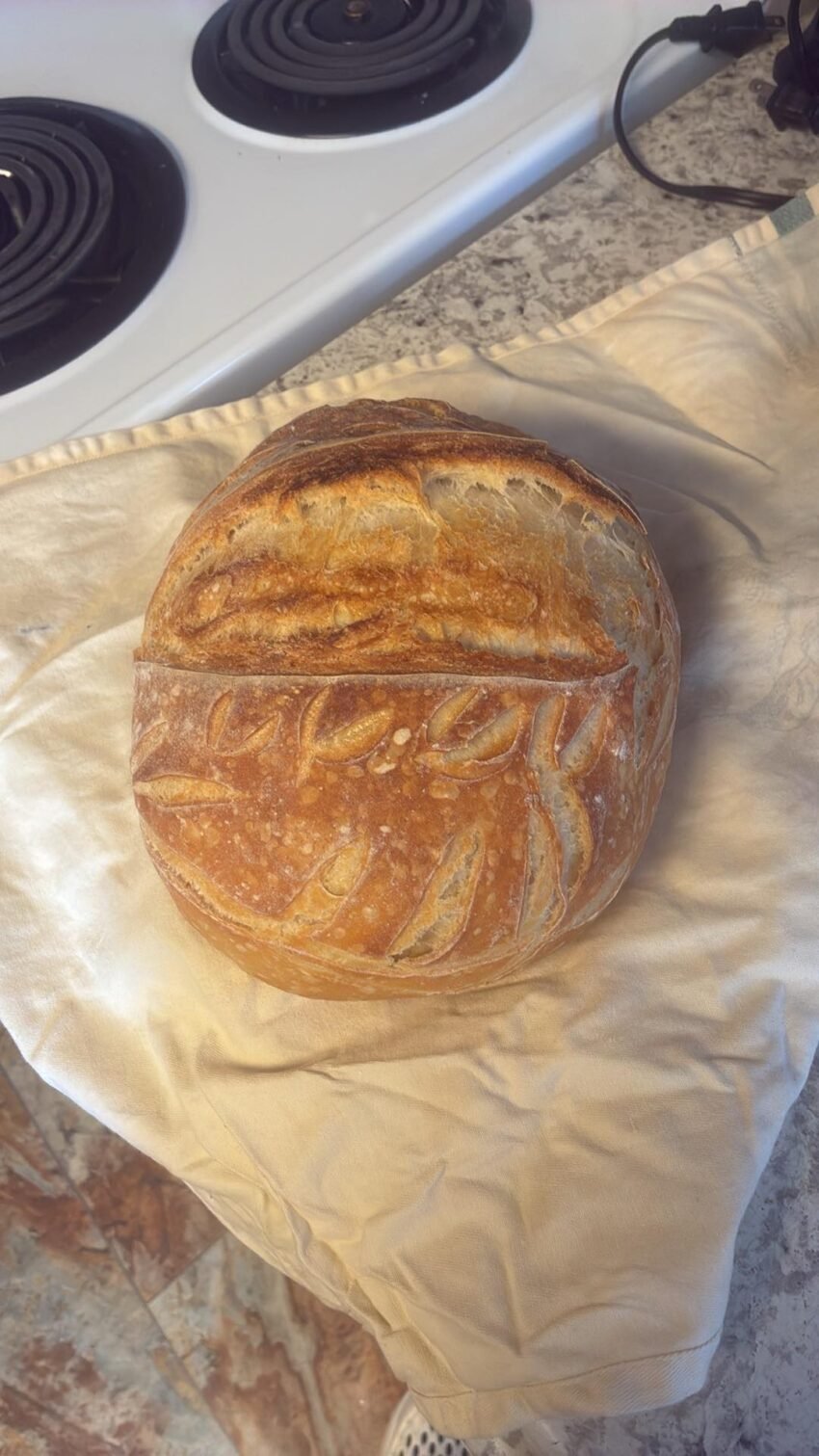
Sourdough Bread (Classic Artisan Loaf)
Sourdough bread is a timeless artisan bread known for its tangy flavor, chewy crumb, and crisp crust. Made using a natural starter instead of commercial yeast, this bread develops deep flavor and a rustic texture that’s perfect for sandwiches, toast, or just enjoying with butter.
With patience and care, you can create a loaf at home that rivals bakery-quality sourdough.
Why You’ll Love This Recipe
✔️ Naturally leavened with a sourdough starter
✔️ Chewy interior with a crisp, golden crust
✔️ Complex, slightly tangy flavor
✔️ Perfect for sandwiches, toast, or soup
✔️ Can be shaped into boules, batards, or sandwich loaves
Ingredients (Makes 1 Medium Loaf)
-
500 g bread flour (or a mix of bread and whole wheat flour)
-
350 g water, room temperature
-
100 g active sourdough starter
-
10 g salt
Optional:
-
1 tablespoon olive oil (for a softer crust)
-
Seeds (sesame, sunflower, or flax) for topping
Step-by-Step Instructions
1. Feed Your Starter
Ensure your sourdough starter is active and bubbly. Feed it 4–6 hours before starting the dough so it’s at its peak.
2. Autolyse
-
In a large bowl, mix flour and water until no dry flour remains.
-
Cover and rest for 30–60 minutes. This helps hydrate the flour and develops gluten.
3. Mix in Starter and Salt
Add the active starter and salt to the dough. Mix thoroughly by hand or using a dough hook in a stand mixer until incorporated.
4. Bulk Fermentation
-
Cover the bowl with a damp towel or plastic wrap.
-
Let the dough rise at room temperature for 4–6 hours, folding the dough every 30–60 minutes (stretch and fold technique) to strengthen the gluten.
-
The dough should increase in size and feel airy and slightly puffy.
5. Shape the Loaf
-
Gently turn the dough onto a lightly floured surface.
-
Shape into a boule (round) or batard (oval) by folding the edges inward to create surface tension.
-
Place the shaped dough seam-side up in a floured proofing basket or bowl.
6. Final Proof
Cover and let the dough proof for 1–2 hours at room temperature, or refrigerate overnight for a slower, more flavorful rise.
7. Preheat Oven
Preheat oven to 475°F (245°C) with a Dutch oven or baking stone inside.
8. Score and Bake
-
Carefully turn the dough onto parchment paper.
-
Score the top with a sharp knife or lame to allow expansion.
-
Place into the hot Dutch oven, cover with the lid, and bake 20 minutes.
-
Remove the lid and bake for an additional 20–25 minutes until crust is deep golden brown.
9. Cool
Let the bread cool on a wire rack for at least 1 hour before slicing. This allows the crumb to set and flavor to develop.
Tips for Perfect Sourdough
✔️ Use active, bubbly starter for best rise.
✔️ Stretch and fold during bulk fermentation instead of kneading.
✔️ For a crispier crust, bake with steam or cover in a Dutch oven.
✔️ Avoid slicing too early—cooling ensures the crumb is fully set.
✔️ Experiment with hydration: higher water content gives a more open crumb.
Flavor Variations
-
Whole Wheat Sourdough: Replace up to 50% of bread flour with whole wheat flour.
-
Seeded Sourdough: Roll the shaped dough in seeds before the final proof.
-
Olive & Herb: Fold chopped olives, rosemary, or thyme into the dough before shaping.
-
Sweet Sourdough: Add raisins, dried cranberries, or a touch of honey for a subtly sweet loaf.
Storage
-
Keep at room temperature in a bread bag or wrapped in linen for 2–3 days.
-
Freeze sliced bread for up to 3 months; toast slices straight from the freezer.
Final Thoughts
Baking sourdough bread is a rewarding process that combines patience with technique. The result is a flavorful, crusty loaf that can elevate any meal. With practice, you’ll be able to adjust hydration, fermentation, and flavors to create your perfect artisan sourdough.