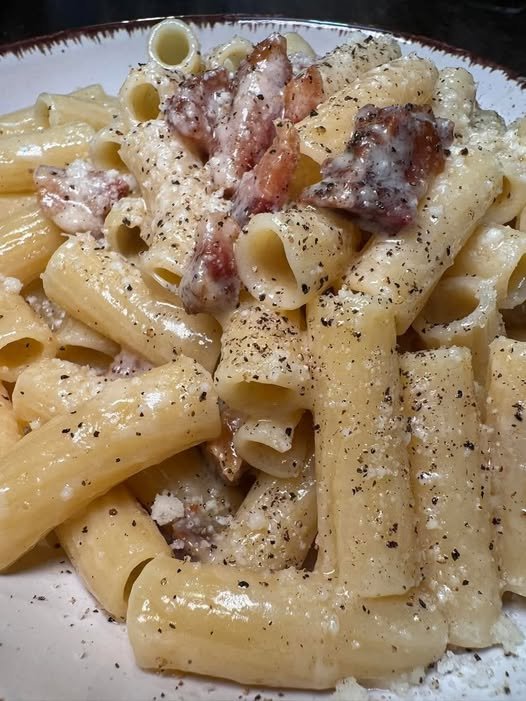
Pasta alla gricia – The Original Roman Classic
Pasta alla gricia is one of the oldest and most authentic pasta dishes from Rome. Often called the “ancestor” of amatriciana and carbonara, this humble yet luxurious recipe proves that simple ingredients can create extraordinary flavor.
With just four main ingredients—pasta, guanciale, Pecorino Romano, and black pepper—Pasta alla gricia is rich, salty, creamy (without cream!), and deeply satisfying.
If you love bold, savory pasta dishes, this Roman classic deserves a permanent spot in your kitchen.
What Is Pasta alla Gricia?
Pasta alla gricia originated in the Lazio region of Italy. It is traditionally made with:
-
Pasta (rigatoni or spaghetti)
-
Guanciale (cured pork cheek)
-
Pecorino Romano
-
Freshly cracked black pepper
Unlike carbonara, it contains no eggs.
Unlike amatriciana, it contains no tomatoes.
The magic lies in the emulsified sauce created from pasta water, rendered guanciale fat, and grated Pecorino.
Ingredients (Serves 4)
-
400 g (14 oz) rigatoni or spaghetti
-
150 g (5 oz) guanciale, cut into strips
-
1 cup finely grated Pecorino Romano
-
Freshly cracked black pepper (generous amount)
-
Salt (for pasta water)
Step-by-Step Instructions
1. Boil the Pasta
Bring a large pot of salted water to a boil. Cook pasta until al dente.
Important: Reserve about 1 cup of pasta water before draining.
2. Cook the Guanciale
Place guanciale in a cold skillet, then turn heat to medium.
Cook slowly until the fat renders and the meat becomes golden and slightly crispy (about 5–7 minutes).
Do not add oil—guanciale releases plenty of fat.
Turn off heat once crisp.
3. Create the Sauce
Add drained pasta directly into the pan with guanciale. Toss well to coat in the flavorful fat.
Add a splash of reserved pasta water and stir.
Remove pan from heat before adding cheese (this prevents clumping).
Gradually add Pecorino while tossing quickly. Add small amounts of pasta water as needed to create a creamy, glossy sauce.
Finish with generous cracked black pepper.
The Secret to Creaminess (Without Cream)
The creamy texture comes from:
-
Starchy pasta water
-
Rendered pork fat
-
Finely grated Pecorino
-
Constant tossing
If the sauce looks dry, add a tablespoon of pasta water at a time.
If it becomes too thick, stir vigorously off heat.
Substitutions (If You Can’t Find Guanciale)
Authentic version uses guanciale, but you can substitute:
-
Pancetta (closest alternative)
-
Thick-cut bacon (less traditional but works)
However, true Roman flavor comes from guanciale’s rich, slightly sweet fat.
Common Mistakes to Avoid
❌ Adding cream
❌ Overcooking pasta
❌ Cooking cheese on direct heat
❌ Using pre-shredded cheese
Freshly grated Pecorino is essential.
Nutritional Highlights
While indulgent, this dish provides:
-
High-quality protein
-
Calcium from Pecorino
-
Satisfying healthy fats
It’s rich, so a small portion is deeply satisfying.
What to Serve With Pasta alla Gricia
-
Simple arugula salad with lemon
-
Roasted vegetables
-
Crusty Italian bread
-
A glass of dry white wine
A Little Roman History
Before refrigeration, shepherds in the Apennine mountains relied on preserved ingredients like cured pork and aged cheese. Pasta alla gricia was born from these shelf-stable staples.
Later, tomatoes were added to create amatriciana. Eggs were added to create carbonara. But gricia remains the pure, original foundation of Roman pasta tradition.
Final Thoughts
Pasta alla gricia is proof that true Italian cooking isn’t about complexity—it’s about technique and quality ingredients.
With only a handful of components, this dish delivers bold flavor, creamy texture, and timeless authenticity. Once you master it, you’ll understand why Romans have loved it for centuries.