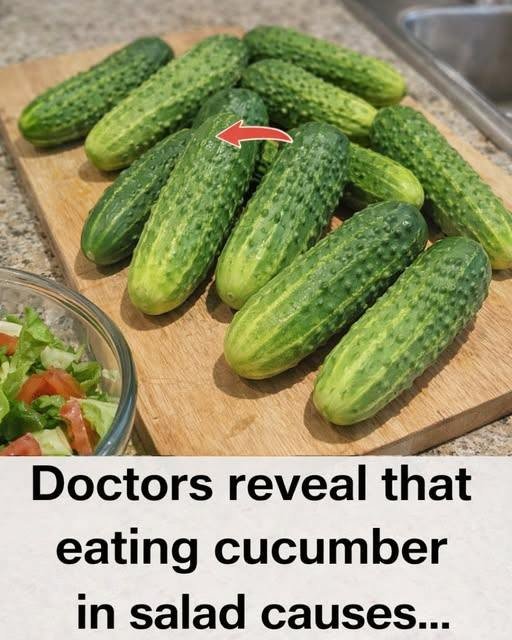
Doctors Reveal That Eating Cucumber in Salads Causes… The Truth Might Surprise You
You may have seen dramatic headlines claiming that “doctors reveal that eating cucumber in salads causes…” followed by alarming suggestions about digestion problems, toxin buildup, or hidden health dangers. But what’s the real story?
Cucumbers have been part of traditional diets for centuries. From Mediterranean cuisine to South Asian meals, they’re widely used in salads, raita, sandwiches, and detox waters. So why are some health articles suddenly questioning them?
Let’s break down what medical professionals actually say about eating cucumber in salads — including both the benefits and the rare cases where caution may be needed.
What Happens in Your Body When You Eat Cucumber?
Cucumbers are made up of about 95–96% water. That alone makes them one of the most hydrating vegetables available. When eaten in salads, they:
-
Support hydration
-
Provide small amounts of fiber
-
Supply antioxidants
-
Deliver vitamin K
-
Offer trace minerals like potassium and magnesium
For most people, eating cucumber in salads causes positive effects — not harm.
1️⃣ Eating Cucumber May Improve Hydration
Doctors consistently emphasize the importance of hydration for:
-
Brain function
-
Skin health
-
Digestion
-
Blood circulation
Because cucumbers are mostly water, they contribute to overall fluid intake. While they don’t replace drinking water, they can support hydration — especially in hot climates.
This is particularly relevant in countries with warmer weather, where water-rich foods can help maintain fluid balance.
2️⃣ It May Support Digestion — But Sometimes Cause Mild Bloating
Here’s where some confusion begins.
Cucumbers contain fiber and natural plant compounds called cucurbitacins. For most people, this promotes healthy digestion and regular bowel movements.
However, in sensitive individuals, especially those with:
-
Irritable bowel syndrome (IBS)
-
Slow digestion
-
Acid reflux
Eating raw cucumber may occasionally cause mild bloating or gas.
Doctors clarify that this is not dangerous — it simply means the digestive system is sensitive to raw vegetables. Peeling cucumbers or removing the seeds can often reduce this issue.
3️⃣ It May Affect Vitamin K Intake
Cucumbers contain vitamin K, a nutrient involved in blood clotting.
For most people, this is beneficial. However, patients taking anticoagulant medications like Warfarin are often advised to maintain consistent vitamin K intake.
Doctors do not recommend avoiding cucumbers completely — rather, they recommend consistency. Sudden large increases or decreases in vitamin K-rich foods can interfere with medication balance.
This applies to many leafy greens as well, not just cucumbers.
4️⃣ It May Expose You to Pesticide Residues (If Not Washed Properly)
One legitimate concern doctors sometimes mention involves pesticide exposure.
Conventionally grown cucumbers can carry surface pesticide residues. Eating them unwashed in salads may increase exposure.
To reduce risk:
-
Wash thoroughly under running water
-
Peel if desired
-
Choose organic when possible
The concern is not about cucumbers themselves — but about agricultural chemicals.
5️⃣ It May Help With Weight Management
Doctors often recommend cucumbers in salads for patients trying to lose weight.
Why?
-
Very low in calories
-
High water content
-
Adds volume to meals
-
Increases satiety
Replacing high-calorie ingredients with cucumber can reduce total calorie intake without reducing meal size.
In fact, many nutritionists include cucumber in weight-loss meal plans because it helps people feel full while consuming fewer calories.
6️⃣ It May Support Heart Health
Cucumbers contain small amounts of potassium and antioxidants. While they are not a “miracle food,” they contribute to:
-
Healthy blood pressure regulation
-
Reduced oxidative stress
-
Improved vascular function
Doctors emphasize that no single food transforms heart health — but cucumber can be part of a balanced, heart-friendly diet.
7️⃣ Rare Allergic Reactions
Though uncommon, some individuals experience oral allergy syndrome when eating cucumber. Symptoms may include:
-
Itchy mouth
-
Mild throat irritation
-
Tingling lips
This is typically related to pollen allergies and cross-reactivity. It’s rare and usually mild.
So Why the Dramatic Headlines?
Health headlines are often written to attract attention. A title like “Doctors reveal that eating cucumber in salads causes…” creates curiosity and encourages clicks.
But when you look deeper, what doctors actually reveal is this:
Eating cucumber in salads usually causes positive health effects, with only minor concerns in specific cases.
When Should You Be Careful?
You may want to moderate cucumber intake if:
-
You experience repeated digestive discomfort
-
You are on blood-thinning medication and have been advised to monitor vitamin K
-
You have a known allergy
-
You do not wash produce properly
Otherwise, cucumbers are considered safe for daily consumption.
The Real Verdict From Medical Experts
For the majority of healthy individuals:
Eating cucumber in salads causes hydration support, digestive benefits, low-calorie satiety, and antioxidant intake.
It does not cause disease.
It does not “damage the liver.”
It does not “block nutrients.”
Those claims are not supported by mainstream medical evidence.
Practical Tips for Maximum Benefit
If you want to get the most from cucumbers:
-
Wash thoroughly
-
Leave the peel on for extra fiber (if organic or well-cleaned)
-
Pair with healthy fats like olive oil to improve nutrient absorption
-
Add lemon juice to enhance flavor and vitamin C intake
Final Thoughts
Cucumbers are one of the safest, most refreshing vegetables you can add to your salad bowl. While certain individuals may experience mild digestive effects or need to monitor vitamin K intake, doctors generally consider cucumbers a healthy addition to a balanced diet.
The next time you see a dramatic headline about cucumbers causing harm, remember: context matters.
For most people, eating cucumber in salads causes exactly what you’d hope — hydration, lightness, and nutritional support.