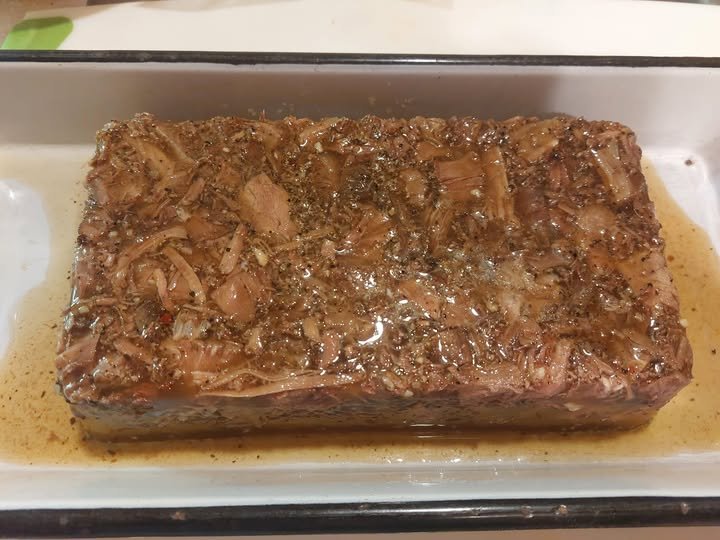
Homemade Headcheese: A Traditional Delicacy Made from Scratch
Homemade headcheese is a time-honored dish rooted in traditional nose-to-tail cooking. Despite its name, headcheese contains no cheese at all. Instead, it is a savory meat terrine or aspic made by slow-cooking pork (traditionally from the head) until tender, then setting the meat in its own natural gelatin. The result is a richly flavored, sliceable delicacy that reflects resourcefulness, culinary heritage, and deep comfort food traditions.
For generations, headcheese has been prepared in homes across Europe, the Americas, and beyond. Today, it’s experiencing a revival among home cooks who value traditional foodways, zero-waste cooking, and bold, authentic flavors.
What Is Headcheese?
Headcheese is a cold cut made from pork head meat—such as cheeks, jowls, and tongue—combined with aromatics and spices, then set in gelatin-rich broth. Once chilled, the mixture firms up naturally, creating a sliceable loaf or terrine.
Depending on the region, headcheese may also be known as:
-
Brawn (England)
-
Fromage de tête (France)
-
Sülze (Germany)
-
Presskopf (Central Europe)
Each variation reflects local spices, vinegar levels, and meat combinations, but the principle remains the same: slow cooking, careful seasoning, and natural gelatin.
Why Make Headcheese at Home?
Making headcheese at home offers several advantages:
-
Complete control over ingredients – no preservatives or fillers
-
Superior flavor and texture compared to store-bought versions
-
Sustainable cooking that honors the whole animal
-
Cultural preservation of traditional recipes
-
Cost-effective use of less expensive cuts
Homemade headcheese is especially rewarding for cooks who enjoy slow, hands-on processes and rustic, old-world flavors.
Key Ingredients
Traditional homemade headcheese requires only a few simple ingredients:
-
Pork head or parts (cheeks, jowls, tongue, trotters)
-
Aromatics: onions, garlic, carrots, celery
-
Herbs & spices: bay leaves, black peppercorns, cloves, thyme
-
Salt
-
Vinegar or lemon juice (optional, for brightness)
The magic comes not from complexity, but from time, patience, and proper seasoning.
Step-by-Step Overview
1. Cleaning and Preparation
The pork head or parts are thoroughly cleaned and rinsed. Any hair or impurities are removed to ensure clarity and cleanliness.
2. Slow Cooking
The meat is placed in a large pot and covered with water. Aromatics and spices are added, then the mixture is simmered gently for several hours. This slow cooking breaks down connective tissue and releases natural gelatin into the broth.
3. Picking the Meat
Once tender, the meat is removed and allowed to cool slightly. Bones, cartilage, and excess fat are discarded, while the tender meat is chopped or shredded.
4. Seasoning and Assembly
The chopped meat is mixed with strained broth and adjusted for salt, pepper, and acidity. This mixture is then packed into molds, loaf pans, or bowls.
5. Chilling and Setting
The headcheese is refrigerated for several hours or overnight. As it cools, the natural gelatin sets, forming a firm but tender loaf.
Texture and Flavor
Homemade headcheese has a rich, savory flavor with a soft yet sliceable texture. The taste is deeply pork-forward, enhanced by herbs and subtle spice. Vinegar or lemon adds balance, preventing heaviness.
The texture can range from:
-
Rustic and chunky with visible meat pieces
-
Smooth and uniform when finely chopped
Both styles are traditional and equally respected.
How to Serve Headcheese
Headcheese is traditionally served cold and sliced thin. Popular serving ideas include:
-
On crusty bread with mustard
-
Alongside pickles, onions, or sauerkraut
-
As part of a charcuterie board
-
With boiled potatoes and vinegar dressing
-
As a farmhouse appetizer
Its bold flavor pairs well with acidic or crunchy accompaniments.
Storage and Shelf Life
Homemade headcheese should be stored in the refrigerator and consumed within 5–7 days. Because it contains no preservatives, freshness is key. It can also be frozen for longer storage, though freezing may slightly affect texture.
Nutritional Perspective
Headcheese is naturally:
-
High in protein
-
Rich in collagen and gelatin, supporting joint and skin health
-
Low in carbohydrates
-
Free from additives when homemade
While it does contain fat, it fits well into traditional, low-carb, or nose-to-tail eating philosophies when enjoyed in moderation.
Tips for Success
-
Simmer gently—never boil hard, or the broth may become cloudy
-
Taste and adjust seasoning before molding
-
Use enough broth to fully coat the meat
-
Chill completely before slicing
-
Slice with a sharp knife for clean edges
A Celebration of Tradition
Homemade headcheese is more than just a recipe—it’s a connection to ancestral cooking, sustainability, and respect for food. In a world of processed convenience, making headcheese from scratch is a return to patience, skill, and intentional eating.
For those willing to embrace its rustic nature, headcheese offers unmatched flavor, deep satisfaction, and a sense of culinary heritage that few modern dishes can replicate.