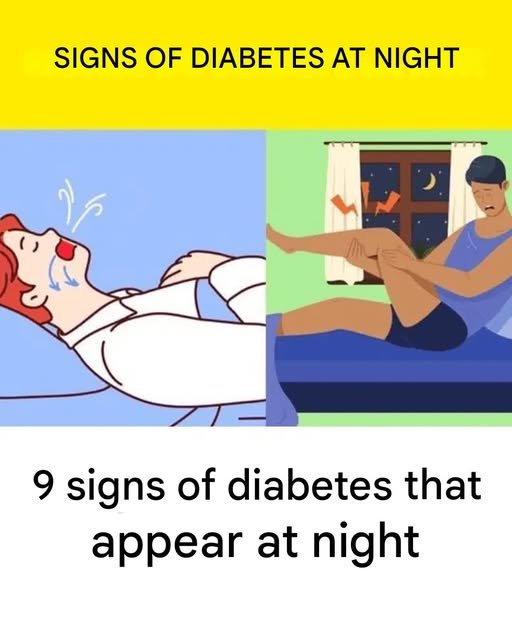
9 Signs of Diabetes That Appear at Night
Diabetes is a common condition that affects how the body processes glucose (blood sugar). While many symptoms can occur throughout the day, some warning signs may become more noticeable at night. Recognizing these early symptoms can help people seek medical attention sooner and manage their health effectively.
Here are nine nighttime signs that may be linked to diabetes.
1. Frequent Nighttime Urination (Nocturia)
One of the most common symptoms is waking up multiple times during the night to urinate. When blood sugar levels are high, the kidneys work harder to remove excess glucose through urine.
This condition, known as Nocturia, can significantly disrupt sleep and leave you feeling tired the next day.
2. Excessive Nighttime Thirst
Frequent urination can lead to dehydration, causing intense thirst during the night. Many people with diabetes report waking up needing to drink water repeatedly.
Persistent thirst is medically known as Polydipsia.
3. Night Sweats
Some individuals experience heavy sweating while sleeping. Night sweats can occur when blood sugar levels drop during sleep, a condition related to Hypoglycemia.
This may cause damp sheets or clothing and disturbed sleep.
4. Tingling or Numbness in Hands and Feet
Many people notice burning, tingling, or numbness in their feet or hands when lying down at night. This can be related to nerve damage caused by prolonged high blood sugar.
This complication is called Diabetic Neuropathy.
5. Restless or Interrupted Sleep
Unstable blood sugar levels can make it difficult to stay asleep. People with diabetes may wake frequently due to thirst, bathroom trips, or discomfort in the legs.
Poor sleep quality can also make blood sugar harder to control the next day.
6. Leg Cramps During the Night
Painful muscle cramps—especially in the calves—can occur while sleeping. These cramps may be linked to circulation problems or nerve damage associated with diabetes.
7. Increased Hunger Late at Night
When blood sugar fluctuates, the body may signal hunger even after eating. Some individuals wake up feeling unusually hungry, a symptom called Polyphagia.
8. Dry Mouth While Sleeping
High blood sugar can reduce saliva production, causing dry mouth and discomfort during the night. People may wake up with a sticky or dry feeling in the mouth and throat.
9. Fatigue in the Morning
Because sleep is often interrupted by other symptoms, people with diabetes may wake up feeling unusually tired or exhausted even after a full night in bed.
Chronic fatigue can be a sign that blood sugar levels are not well balanced.
When to See a Doctor
If you regularly experience several of these symptoms—especially frequent urination, extreme thirst, or numbness in the feet—it’s important to consult a healthcare professional. A simple blood test can determine whether your blood sugar levels are normal.
Early detection of Type 2 Diabetes can help prevent complications and allow for effective treatment and lifestyle changes.
Tips for Supporting Healthy Blood Sugar
Healthy lifestyle habits can play an important role in blood sugar management:
- Maintain a balanced diet rich in whole foods
- Stay physically active
- Monitor blood sugar levels if recommended
- Maintain a healthy weight
- Limit sugary drinks and highly processed foods
- Follow medical advice for medications or treatment
Final Thoughts
Nighttime symptoms can sometimes provide important clues about underlying health conditions. While these signs do not automatically mean someone has diabetes, they may indicate that blood sugar levels need attention.
Paying attention to your body, maintaining healthy habits, and seeking medical advice when needed can help protect your long-term health and well-being.