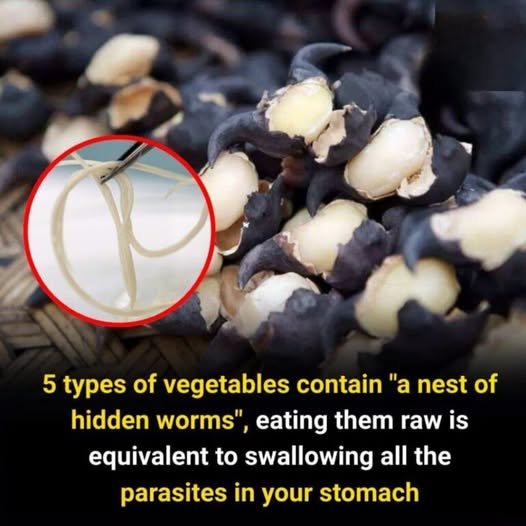
5 Vegetables You Should Never Eat Raw — They Could Harbor Hidden Parasites
Vegetables are essential for a healthy diet, but some can carry hidden risks if eaten raw. Certain vegetables can host parasites or worms that, if ingested, may develop into stomach or intestinal infections. While proper washing, cooking, and preparation can prevent most issues, it’s important to know which vegetables are potentially risky when consumed raw.
1. Leafy Greens Grown in Contaminated Soil
Spinach, lettuce, and other leafy greens are often eaten raw in salads. However, if these leaves are grown in soil contaminated with animal feces or untreated manure, they can harbor parasite eggs, including those of roundworms or protozoa.
Safety Tip: Wash thoroughly under running water and consider blanching or lightly steaming greens if you’re unsure about their source.
2. Carrots
Carrots grow underground and can carry soil-borne parasites. Roundworm larvae and other helminths may stick to the root’s crevices. Eating unwashed or improperly peeled carrots can increase the risk of ingesting these organisms.
Safety Tip: Always scrub carrots under running water and peel them if you plan to eat them raw. Cooking kills most parasites.
3. Beets
Like carrots, beets are root vegetables exposed to soil and possible contamination. While the risk is lower than in leafy greens, raw beets may carry parasite eggs if grown in untreated soil.
Safety Tip: Peel, cook, or roast beets to reduce the risk of contamination.
4. Cucumbers
Cucumbers often grow close to the ground and may come in contact with animal feces or contaminated water. Tiny worms or eggs can hide in the skin or stem area.
Safety Tip: Wash thoroughly and consider peeling cucumbers, especially if they aren’t organically grown or washed.
5. Sprouts (Alfalfa, Bean, or Broccoli Sprouts)
Sprouts are notorious for bacterial and parasitic contamination because the warm, humid conditions used to grow them are perfect for pathogens. Worms are less common than bacteria, but the risk exists.
Safety Tip: Buy sprouts from trusted sources and cook them lightly, or avoid raw consumption entirely.
General Safety Guidelines
-
Wash thoroughly: Rinse vegetables under running water and use a brush for root vegetables.
-
Peel when necessary: Skin can hide parasites or eggs.
-
Cook when unsure: Boiling, steaming, roasting, or sautéing kills most parasites.
-
Avoid untreated fertilizers: Use organic or composted sources to minimize contamination.
-
Store properly: Keep vegetables refrigerated and separate from raw meats.
Final Thoughts
While most fresh vegetables are safe when grown and handled properly, certain types—especially root vegetables, leafy greens, and sprouts—can harbor parasites if eaten raw. Taking simple precautions like washing, peeling, and cooking can significantly reduce your risk.
Eating vegetables is still a cornerstone of a healthy diet, but awareness and proper preparation are key to keeping your meals both nutritious and safe.